
It's natural to ask for time off from work or school, but how you ask counts. A well-written leave request indicates that you are responsible, follow the regulations at work, and can communicate clearly. If you follow the right steps, you are more likely to get sick leave, a one-day absence, casual leave, emergency leave, or annual leave.
This article shows you step by step how to draft a leave application and gives you real-life examples to follow.
Why it's important to write a good leave application
Planning and cooperation are important for businesses and schools. When employees or students ask for time off clearly, it makes it easier for managers and teachers to change schedules and responsibilities. A well-organized leave request also shows that you are professional and responsible.
Basic Structure of a Leave Request
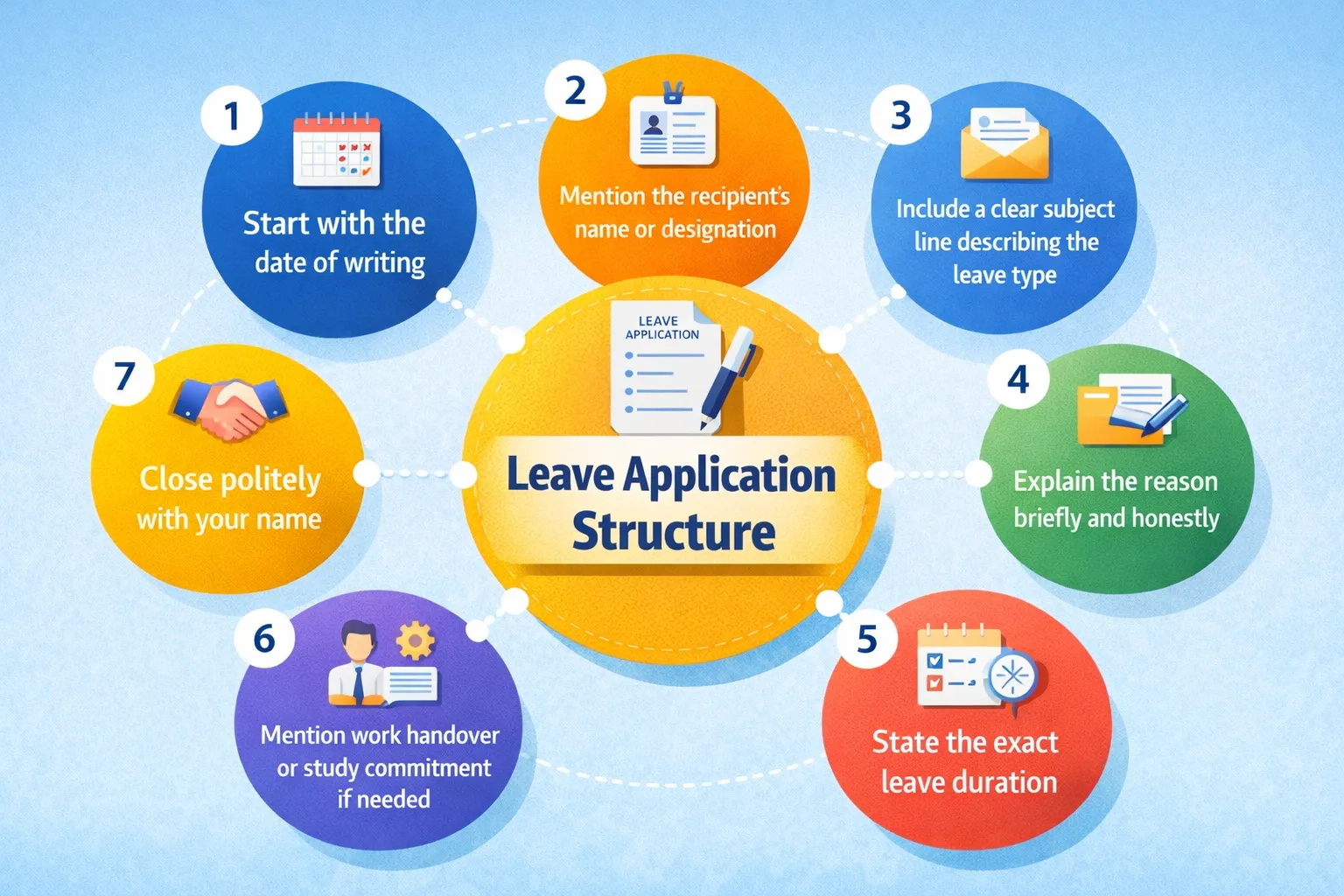
How to Write a Leave Application?
- Begin with the date you wrote it.
- Include the person's name or title as the recipient.
- Make sure the subject line clearly says what kind of leave it is.
- Be honest and short when you explain why.
- Say how long the leave will last.
- If you need to, talk about work handover or studies commitment.
- Politely end with your name.
This structure keeps the application professional and makes it easier to approve.
How to Write a Leave Application in Steps
- First, make sure the subject line is clear. For instance, "Request for One Day Leave" or "Sick Leave Application." This makes it easier for the reader to understand what you want right away.
- Next, start with a polite welcome like "Dear Manager" or "Respected Sir." Don't start with a casual greeting.
- Then, in one or two words, tell why. Stay factual. Long emotive explanations are not needed and make things less clear.
- Next, tell them the exact dates of your leave. Instead of saying "a few days," say when the event will start and end.
- If you work in an office, say a few words about how duties are handled or how coworkers are kept up to date. Students can say that they will finish lessons they missed.
- Finally, gently close the application and put your name or title at the end.
Examples of Applications for Leave
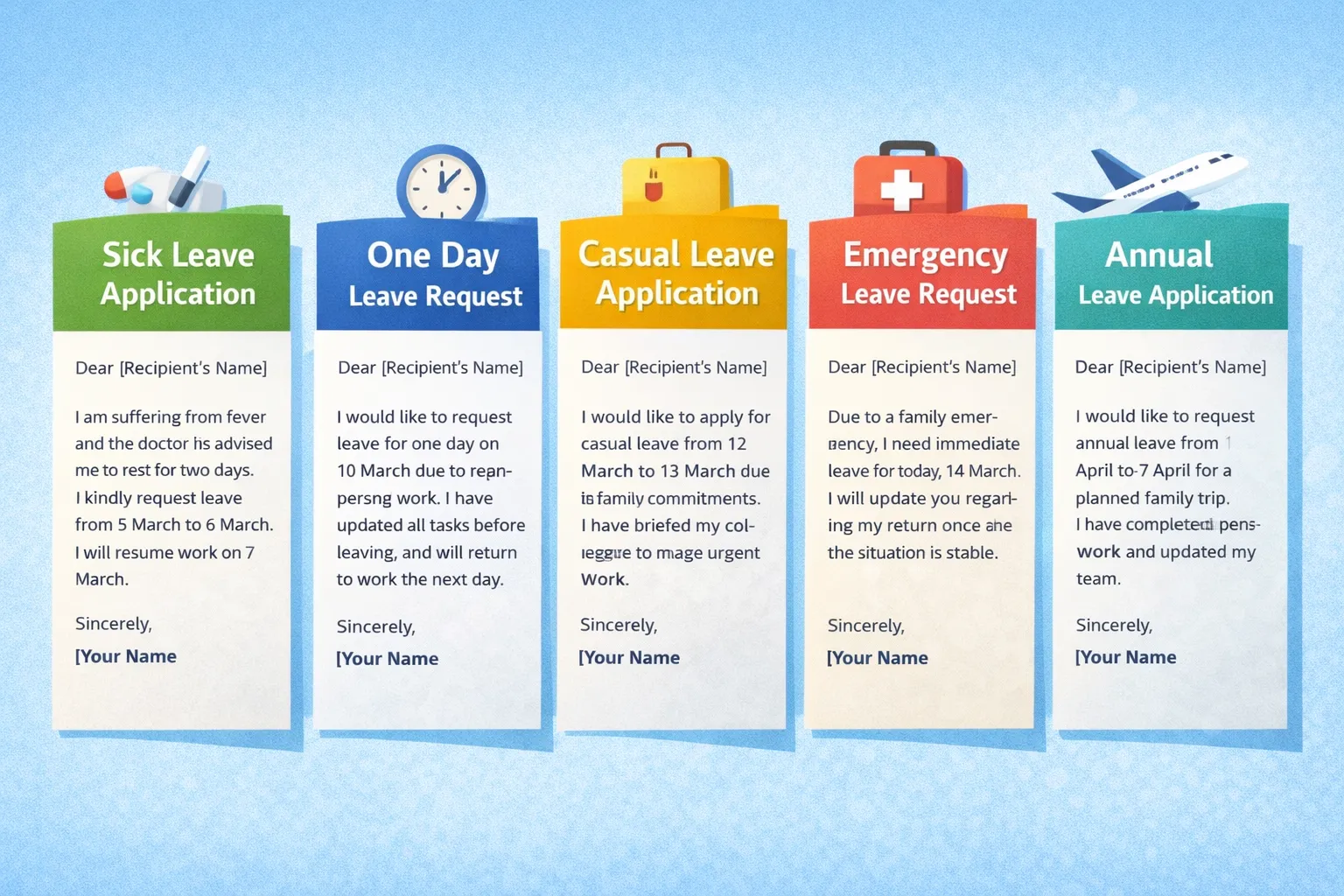
Example 1: Application for Sick Leave
- Date [DD/MM/YYYY]
- To
- The Principal
- [School/Organization Name]
- [Address]
- Subject: Request for Sick Leave
- Dear Sir,
- I respectfully wish to inform you that I have been suffering from a fever and recently consulted a doctor regarding my health condition. After examining me, the doctor advised that I take complete rest for at least two days in order to recover properly and prevent the illness from worsening.
- Following the doctor’s advice, I kindly request sick leave from March 5 to March 6. During this period, I will take the necessary rest and medication to recover fully. I assure you that I will return to work on March 7 and resume my regular duties with full responsibility.
- I sincerely apologize for any inconvenience my absence may cause and greatly appreciate your kind understanding and support.
- Thank you for your consideration.
- Yours sincerely,
- Your Name
- ID: [ID No]
- Dept: [Name of Dept]
Example 2: Application for One Day
- Date: March 10, 2026
- To
- The Manager / Boss
- [Company Name]
- [Company Address]
- Subject: Request for a Day Off
- Dear Boss,
- I hope you are doing well. I would like to respectfully request a day off on March 10 due to some personal matters that require my attention and presence. Unfortunately, these matters cannot be postponed, so I need to take this day to address them properly.
- Before taking leave, I will make sure that all of my current tasks and responsibilities are up to date. I will complete any urgent work in advance and ensure that there is no disruption to the workflow during my absence. If necessary, I will also coordinate with my colleagues so that ongoing work continues smoothly.
- I truly appreciate your understanding and consideration regarding my request. Please grant me leave for the mentioned date.
- Thank you for your time and support.
- Best regards,
- Your Name
- ID: [ID No]
- Dept: [Name of Dept]
Read More: Most people make these common mistakes in leave applications. You can easily create a professional leave application using our leave application generator.
Example 3: Request for Casual Leave
- To
- The Manager / Sir
- [Company/Organization Name]
- [Address]
- Subject: Request for Casual Leave
- Dear Sir,
- I hope you are doing well. I would like to respectfully request casual leave from March 15 to March 16 due to certain family obligations that require my attention and presence during this time. As these matters are important and cannot be postponed, I kindly ask for your permission to take leave for the mentioned dates.
- Before going on leave, I will make sure that all of my pending tasks and responsibilities are properly managed. I will complete any urgent assignments in advance and ensure that my work is up to date so that there will be no disruption to the regular workflow. If necessary, I will also coordinate with my colleagues to ensure that ongoing tasks continue smoothly in my absence.
- I would be grateful for your kind consideration of my request. I assure you that I will resume my duties promptly after the leave period and continue my work with full dedication.
- Thank you very much for your understanding.
- Yours truly,
- Your Name
- ID: [ID No]
- Dept: [Name of Dept]
Example 4: Application for Emergency Leave
- To
- The Manager / Sir
- [Company/Organization Name]
- [Address]
- Subject: Application for Emergency Leave
- Dear Sir,
- I hope you are doing well. I am writing to inform you that I am currently facing an unexpected family emergency that requires my immediate attention and presence. Due to the urgent nature of this situation, I kindly request emergency leave starting today so that I can attend to this matter without delay.
- As this situation arose suddenly, I was unable to provide prior notice. I sincerely apologize for any inconvenience my sudden absence may cause. I will do my best to ensure that my responsibilities are managed as smoothly as possible, and I will update you about my return to work once the situation has settled.
- I would be very grateful for your understanding and support during this difficult time. Thank you for considering my request.
- Yours sincerely,
- Your Name
- ID: [ID No]
- Dept: [Name of Dept]
Example 5: Request for Annual Leave
- To
- The Manager
- [Company/Organization Name]
- [Address]
- Subject: Request for Annual Leave
- Dear Manager,
- I hope you are doing well. I would like to formally request annual leave from April 1 to April 7 as I have planned a family trip during this period. This trip has been scheduled in advance, and it will allow me to spend some important time with my family.
- Before submitting this request, I have made sure that my current tasks and responsibilities are properly managed. I will complete all pending work before my leave begins and ensure that there are no unfinished duties that could affect the workflow. I have also informed my team members about my planned absence so that they are aware of the situation and can manage any necessary matters during that time.
- I will remain reachable for any urgent communication if required. After the leave period ends, I will return to work on April 8 and continue my duties with full commitment.
- I kindly request your approval for the mentioned leave dates. Thank you for your understanding and consideration.
- Yours sincerely,
- Your Name
- ID: [ID No]
- Dept: [Nam of Dept]
Things You Shouldn't Do
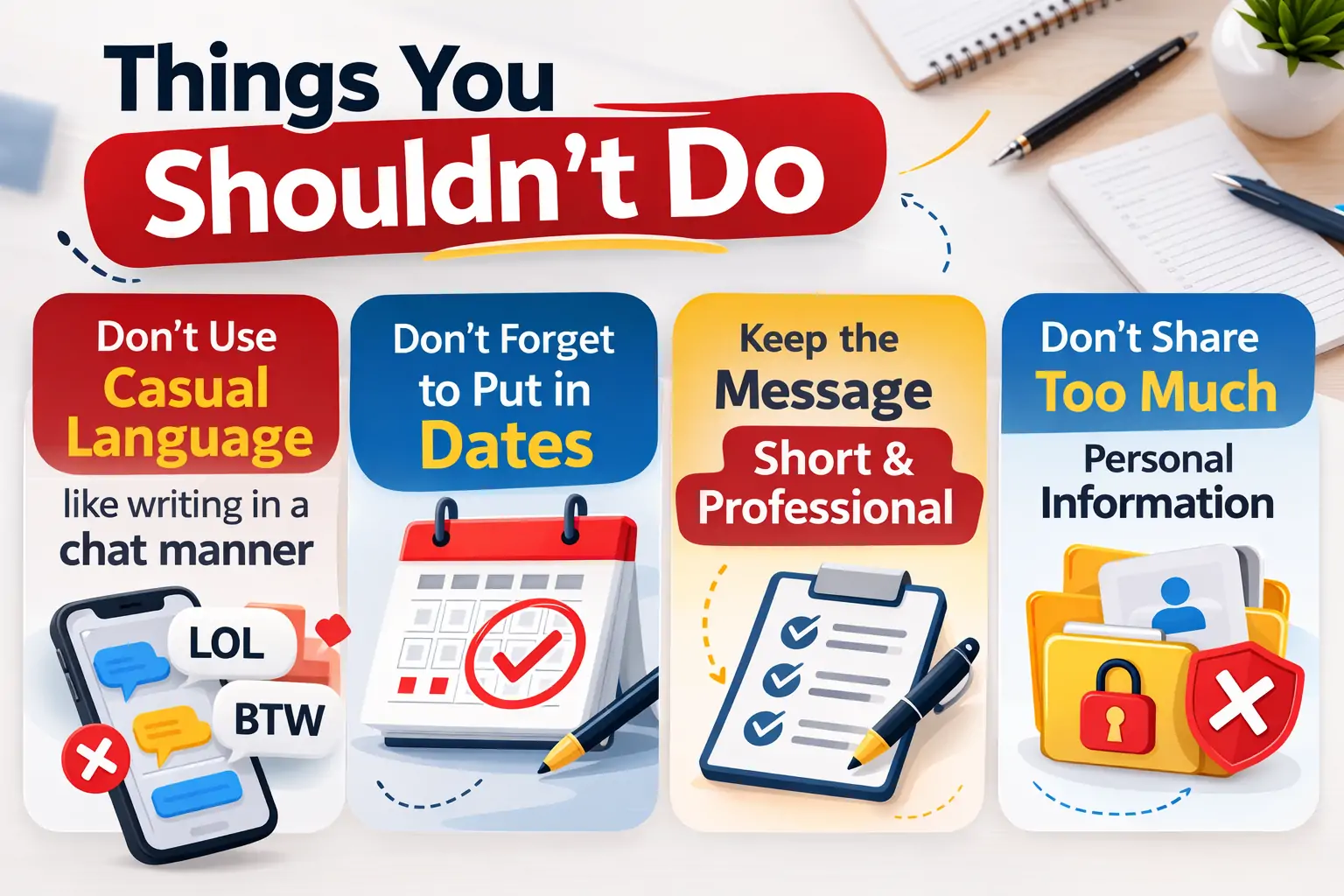
- Don't use casual language like writing in a chat manner.
- Don't forget to put in dates.
- Make sure the message is short and professional.
- Don't make your explanations sound bigger than they are or give too much personal information.
Final Thoughts
It's easy to write a leave application, but doing it right shows that you are competent and trustworthy. Your request is easy to approve if you have a clear subject, a good rationale, and a set time frame for your leave. If you follow the framework and examples above, you can confidently draft leave requests for work, school, or college.
Leave Application FAQs
Q1: How do I write a leave application?
=> When writing a leave request, be sure to include the date, the name of the person you are sending it to, the subject line, the reason for the leave, the length of the leave, and a courteous closure. Make sure the application is short, straightforward, and professional.
Q2: What is the format of a leave application?
=> The date, the person to whom the leave request is sent, the subject, the reason for the leave, the number of leave days, and your name and signature should all be at the conclusion of the leave application.
Q3: How do I write a sick leave application?
=> When you apply for sick leave, tell your boss what ailment you have, when you will be gone, any recommendations from your doctor, and when you plan to come back.
Q4: How do I request one day leave?
=> You can ask for one day off by writing a simple letter that says why you need the day off, when it will be, and that your job will be taken care of.
Q5: Is a leave application a formal letter?
=> Yes, a leave application is a formal letter because it is written to request official permission for leave from school, college, or office.
Q6: What should I avoid in a leave application?
=> Don't use casual language, give extended explanations, leave out dates, or give vague justifications. Make the application look professional and simple..
Q7: Can I send a leave application by email?
=> Yes, a lot of businesses will take leave requests by email. It seems like an official letter, yet it's written in email format.
Q8. How many days before should I apply for leave?
=> You should apply at least 2 to 7 days before you want to leave. Let us know as soon as possible if you need emergency leave.