
It may appear easy to write a leave request, yet many of them are delayed or turned down because of little flaws. Knowing what frequent mistakes are will help you create a better and more professional leave application, whether you're a student or an employee.
This post talks about common mistakes people make when applying for leave and how to fix them to increase the chances of getting approved.
Common Mistakes to Avoid When Applying for Leave
1. Not Mentioning Clear Leave Dates
Not saying how long the leave would last is one of the most typical blunders.
Example that is wrong: "I need a few days off."
The right way to say it is, "I ask for leave from March 12 to March 14, 2026."
Always include:
- Start date
- End date
- Total number of days (if needed)
Clear dates keep things from becoming mixed up and slow down processing.
2. Not having a good subject line when you write
A leave application that doesn't include a subject line seems unprofessional and unfinished.
Weak subject: Leave
Better subject: Request for Sick Leave from March 12 to March 14
A clear subject line helps the authorities immediately understand what you want.
3. Using language that is not formal or casual
A request for leave is a formal message. Don't use slang or texting jargon.
Don't:
- "Hello, Sir"
- "I won't be there tomorrow."
- "Need to leave right away"
Use:
- "Dear Sir/Madam"
- "I kindly ask for leave"
- "I won't be able to go"
A professional tone shows that you are responsible.
4. Sharing too much personal information
Some applicants give emotive reasons that aren't needed. Make the reason short and to the point.
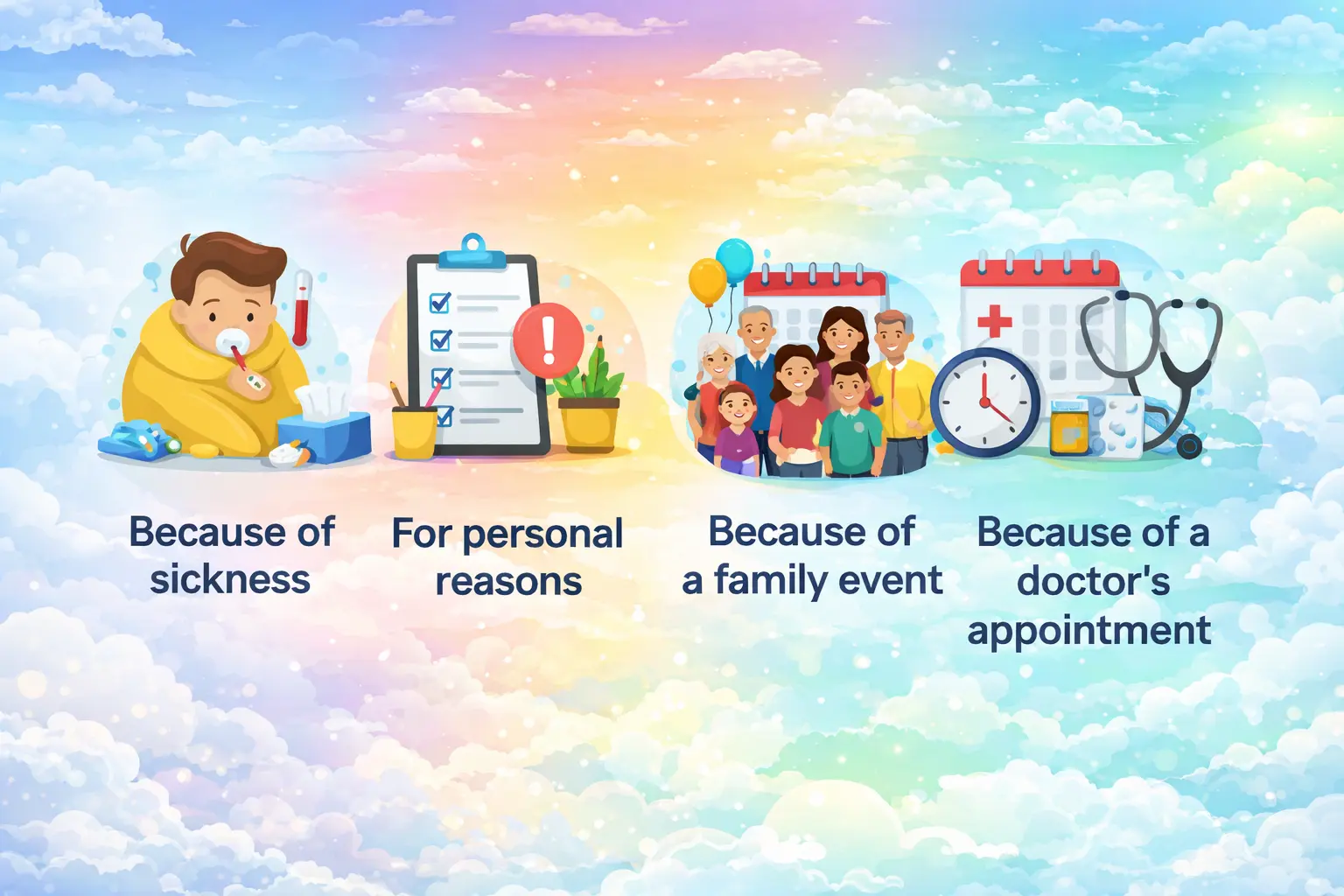
Instead of writing a long story, just say why:
- Because of sickness
- For personal reasons
- Because of a family event
- Because of a doctor's appointment
Clarity is more important than length.
5. Not Bringing Up Work Arrangement
In the workplace, not saying how your job will be controlled can make it less likely that you will get permission.
Good practice:
- The tasks will be done before the leaving.
- People have been given their duties.
- If necessary, urgent concerns can be taken care of from a distance.
This demonstrates that you are responsible.
6. Not following the company's or school's leave policy
Every company has its own rules about:
- Maximum number of days off
- Time to give notice
- Documents that are needed
- Requirements for a medical certificate
If you don't follow the rules when you ask for leave, it could be denied.
Always read the rules for your company before applying.
7. Giving Notice of Leave at the Last Minute (Without Urgency)
You should ask for planned leaves ahead of time. Last-minute applications are a hassle unless it's an emergency.
Submitting early makes people more likely to trust and approve.
8. Bad grammar and formatting
Bad formatting and spelling mistakes make you look less professional. Before you send: Check your spelling Check the dates Make sure the structure is right Check the name and title of the receiver Proofreading makes things more believable.
A lot of people do these things wrong.
Mistakes in spelling and formatting make you look less professional.
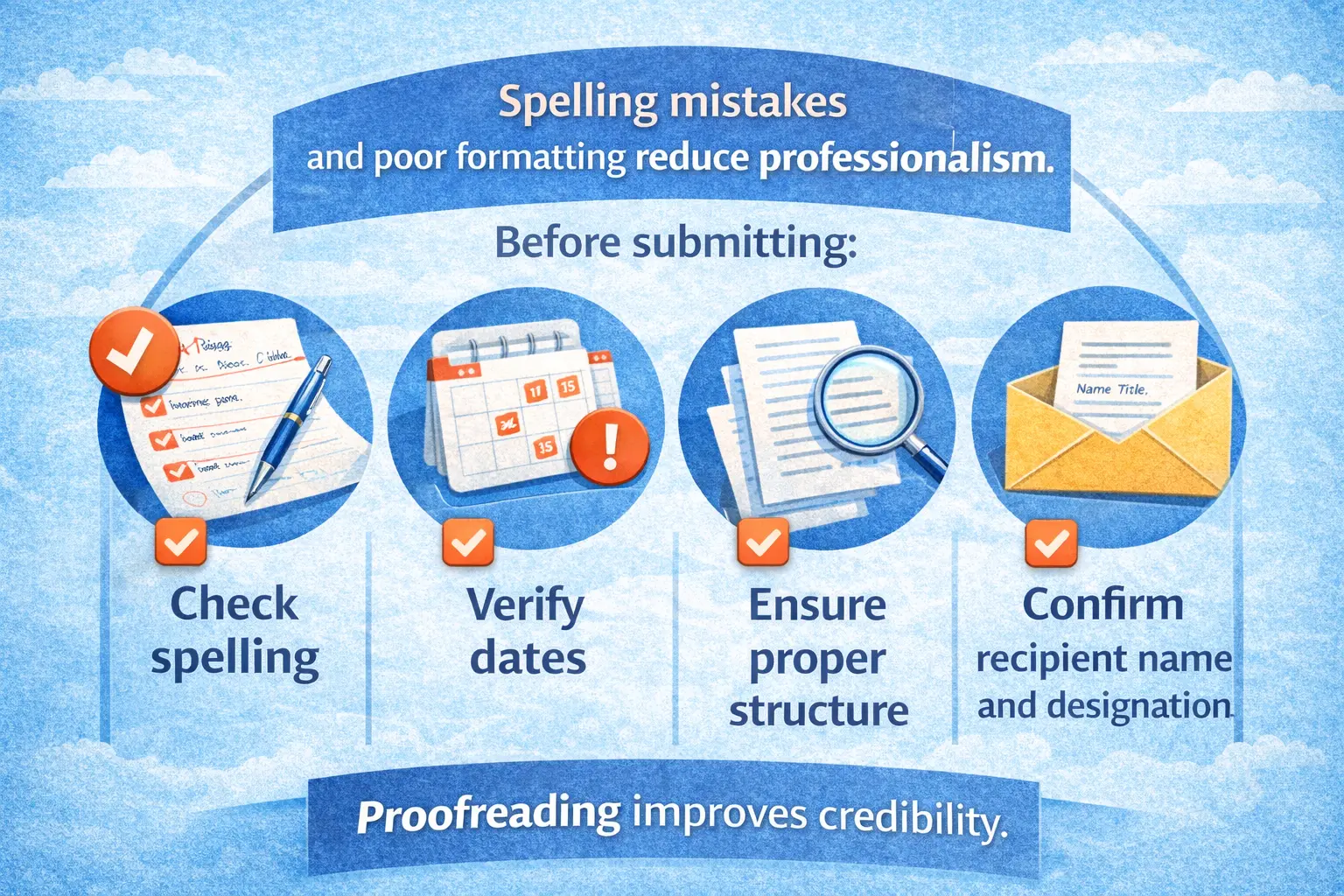
Before you send:
- Look at the spelling
- Check the dates
- Make sure the structure is right
- Check the name and title of the receiver
Proofreading makes you look more trustworthy.
9. Not include a name or signature
Your leave application seems incomplete if it doesn't have your name, title, or class.
Always add:
- Full name
- Name or class
- Student roll number
This makes sure that the right person is identified.
10. Sending Through the Wrong Channel
Some companies want leave requests to be made through:- Portal for HR
- Email from the government
- Letter on paper
- Submitting through the improper channel could slow down the approval process.
Check that you are using the right way to submit.
Read More: Are you sick and need leave? Follow our step-by-step guide with examples.
Are you a student or employee? Check out our complete leave application writing guide for students and employees.
How to Write a Good Leave Application
To make sure you don't make any mistakes, your leave application should include:
- Subject line that is clear
- Exact dates for leave
- Short reason Tone of professionalism
- Good closing Signature and other information
This checklist will help you make a professional and organized request for leave.
Last Thoughts
A leave application shows how well you can follow rules and talk to people. Small mistakes can slow down the review process, but formatting, clarity, and professionalism can all make a big difference in how often you get approved.