You've spent a lot of time making your résumé flawless. You meet all of the requirements for the job. You click "submit," and then you wait. And wait.
Your cover letter could be the reason your application is slipping into a black hole.
Some people claim that cover letters are no longer useful, however 83% of hiring managers say that a great cover letter can get you an interview even if your resume isn't ideal. But what about a lousy cover letter? That means you'll definitely end up in the rejection pile.
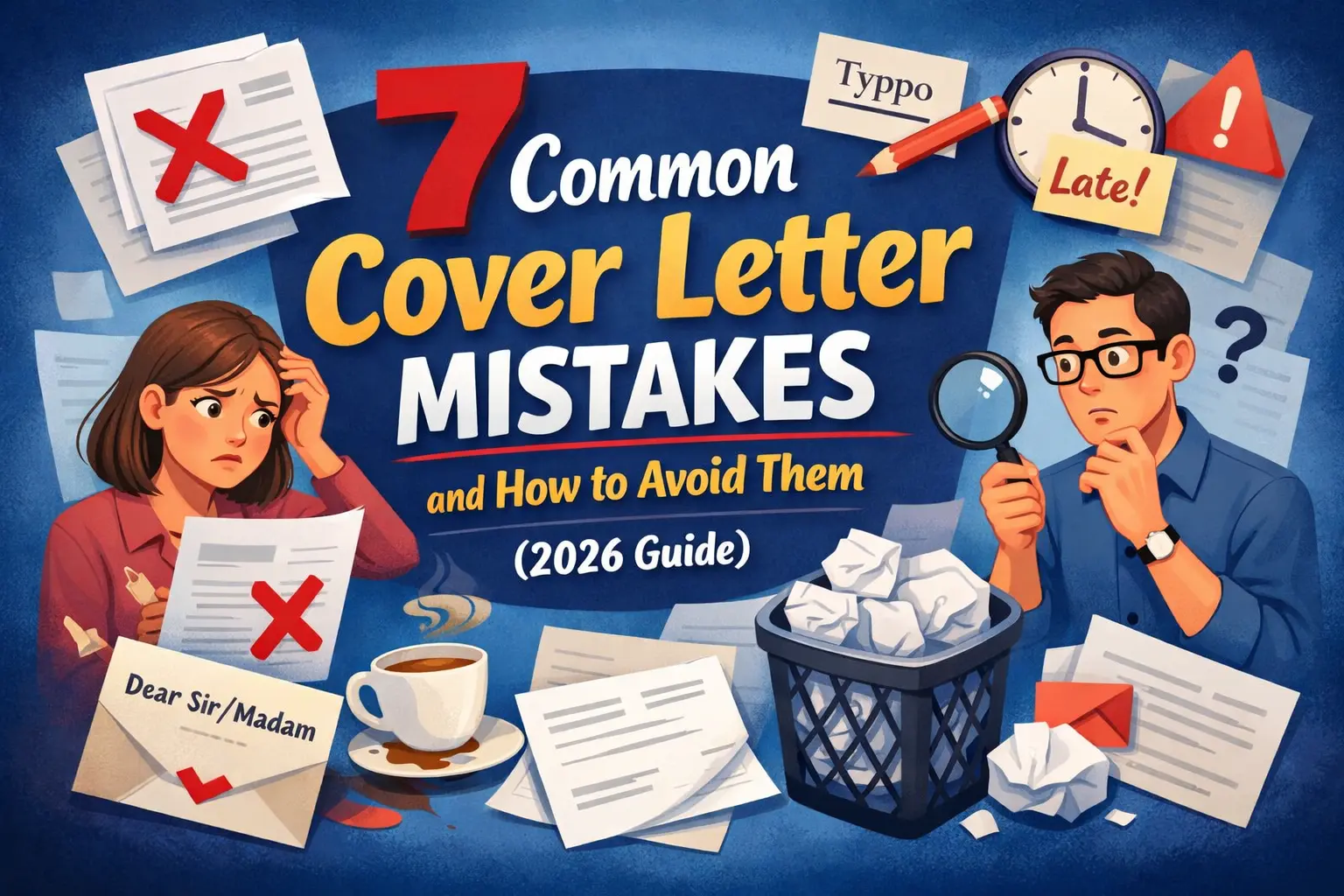
In order to help candidates present themselves to potential employers in a clear, professional, and confident manner, career counseling frequently identifies common errors in cover letters.Here are the seven most common mistakes people make in cover letters and how to solve them so you can stand out for the right reasons.
7 Cover Letter Mistakes Job Applicants Often Make
Mistake #1: Just going over your resume again
The Issue:
The people who are hiring have already looked at your résumé. If your cover letter only says, "I worked as a sales associate at Company X and did A, B, and C," you've wasted their time. It shows that you didn't put in the time or effort to respect the reader's time.
How to Avoid It:
Your cover letter should add to your resume, not repeat it.
Focus on the "Why":
Don't just say what you did; explain why it matters.
Tell a story:
Choose one or two of your most important accomplishments from your resume and talk about them in further detail. What issue did you fix? What did you do? What happened?
- Bad: "I was in charge of a group of five people."
- Good: "I joined a team that was having trouble with low morale and changed the way we worked, which led to a 20% rise in productivity in three months."
Mistake #2: Using a Template That Works for Everyone
The Problem: We understand that applying for employment is tiring. You could want to draft one letter and send it to fifty employers. But recruiters can tell a boilerplate letter from a mile away. If your letter starts with "To Whom It May Concern" or talks about nonspecific skills like "being a hard worker," it means you didn't take the time to learn about the organization.
How to Stay Away From It:
Make each letter unique.
- Find the Name of the recruiting Manager: Take two minutes to look up the recruiting manager's name on LinkedIn or the company's website. Use it.
- Mirror the Job Description: If the job post talks a lot about "project management," make sure that word is in your letter with an example that fits.
- Do Your Research: Talk about a recent news story about the company or a project they just started. "I was excited to see that your company just released [Product X] because..."
Mistake #3: Thinking about what the job will do for you
The Issue:
It's a bad sign if your cover letter seems like a wish list, like "I want a job with growth potential," "I'm looking for a challenging role," or "I hope to gain experience in..." It makes it seem like you're more interested in what the company can do for you than what you can do for it.
What to Do to Avoid It:
Follow these steps:
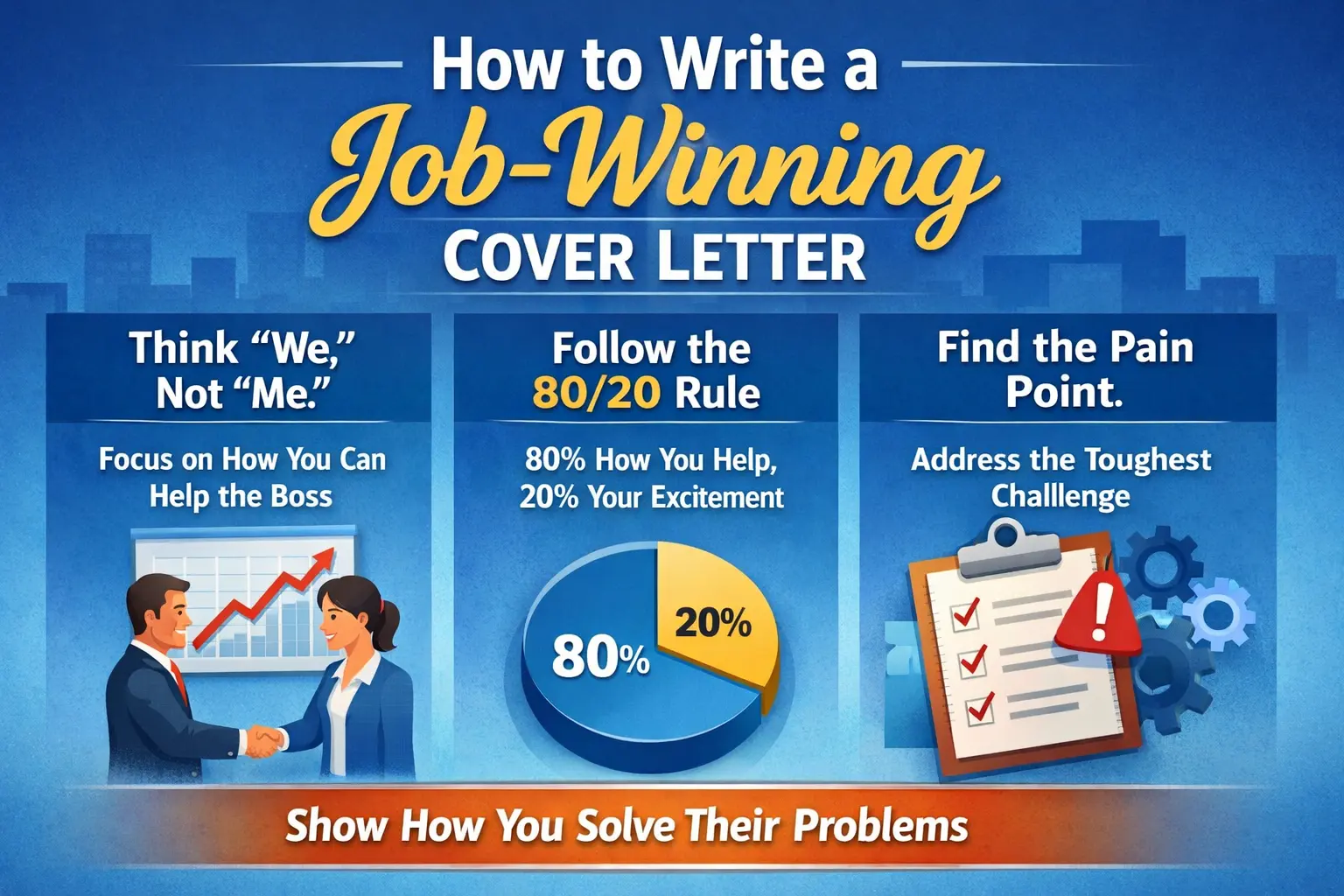
- Change your way of thinking from "me" to "we." Every sentence should address the question: How does this help the boss?
- Follow the 80/20 Rule: 80% of your letter should be on how you can help them, and only 20% should be about how excited you are about the job.
- Find a Pain Point: Read the work description and find the hardest part of the job. Tell us how your abilities help you tackle that problem.
Also Read: How to Write a Professional Cover Letter for a Job Application With Example
Mistake #4: Being too long or too short
The Issue:
On average, hiring managers only look at a cover letter for 6 to 8 seconds at first. People will skim over a wall of text (more than four paragraphs) because it looks too long. On the other hand, a two-sentence letter that says "My resume is attached" seems lazy and rude.
How to Stay Away From It:
Stay in the "Goldilocks" zone: three to four short paragraphs.
- The Hook: Get their attention.
- The Value Prop: Talk about your most important accomplishments.
- The Ending: Summarize and tell them what to do.
Use white space to make it easier on the eyes and keep paragraphs short.
Mistake #5: Not Using Keywords
The Issue:
Many businesses, especially big ones, utilize Applicant Tracking Systems (ATS) to look at applications. These programs get rid of cover letters and resumes that don't have certain keywords from the job description. If your letter is full of flowery language but not enough technical words, a robot might never let a person see it.
How to Stay Away from It:
Look at the job ad and underline the hard skills and particular terms used (such "Google Analytics," "Budget Forecasting," and "Java").
Put them in naturally: Use these words in the right way in your sentences. Don't just write them down; prove that you know them.
Mistake #6: Speaking like a robot or a dictionary
The Issue:
Many people looking for work use rigid, old-fashioned language in an effort to be professional. "I am writing to apply for the job you posted..." or "Please find my resume attached for your review." This kind of writing doesn't have any personality and makes you sound like you don't want to talk to anyone.
How to Stay Away from It:
Write like a real person, but a professional one.
Don't use phrases like "think outside the box," "synergy," or "go-getter."
- Read It Aloud: If it doesn't sound like anything you would say in real life, get rid of it and write it again.
- Show Your Excitement: Let your real excitement for the job show through. You can be both professional and passionate at the same time.
Mistake #7: Spelling and Grammar Mistakes
The Issue:
This is the worst error you could make. How can an employer trust you with vital customer emails or company reports if you can't even check your own application? One mistake can ruin all the work you've done.
How to Stay Away From It:
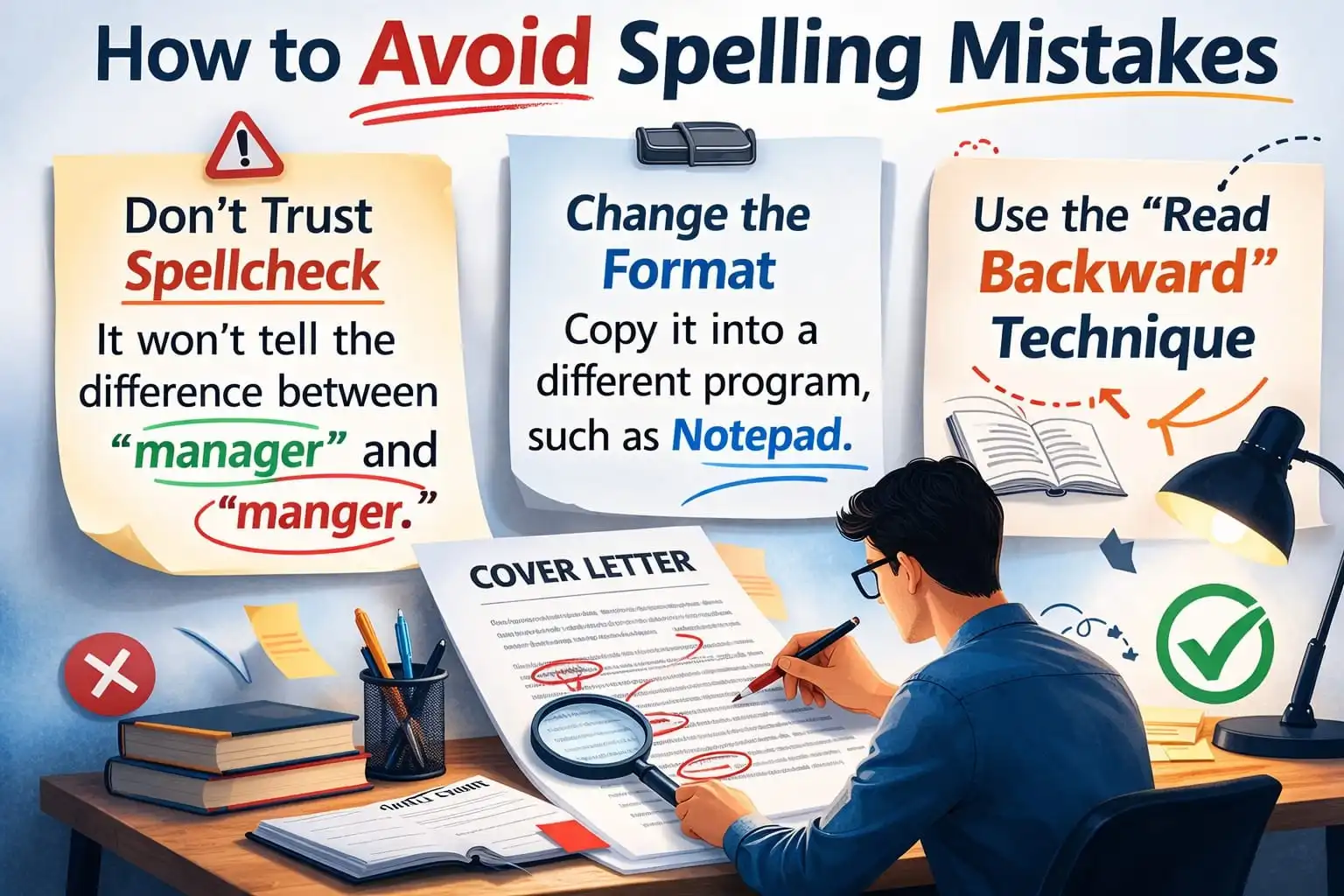
- Don't Trust Spellcheck: It won't be able to tell the difference between "manager" and "manger."
- Change the Format: To examine your letter with fresh eyes, copy it into a different program, such Notepad.
- The "Read Backwards" Trick: Read your letter backward, starting with the last sentence. This stops the story from flowing and makes your brain focus on each word.
Ask a friend to look it over.
The Bottom Line
Your cover letter is the first step to getting the job. You can connect the dots between your experience and the job description here. You may turn your application from a chore into an effective marketing tool by avoiding these seven mistakes: using a generic template, copying and pasting your CV, and making typos.