
A cover letter is a very important part of applying for a job. A cover letter explains why a candidate is a good fit for a job, while a resume lists their qualifications, education, and work history. Employers often read cover letters to see how well you can communicate, how professional you are, and how interested you are in the job.
A good cover letter introduces the applicant, talks about their relevant skills, and shows how their experience matches the job requirements. Writing clearly and professionally can make it more likely that you will get an interview.
What a Cover Letter Is For?
The main job of a cover letter is to add more information about the applicant's background to their resume. The letter shouldn't just repeat the whole resume; it should explain how the candidate's skills and experience fit the job.
Most of the time, employers get a lot of job applications. A short and to-the-point cover letter makes it easy for them to see why a candidate might be a good fit for the job.
The Basic Format of a Cover Letter
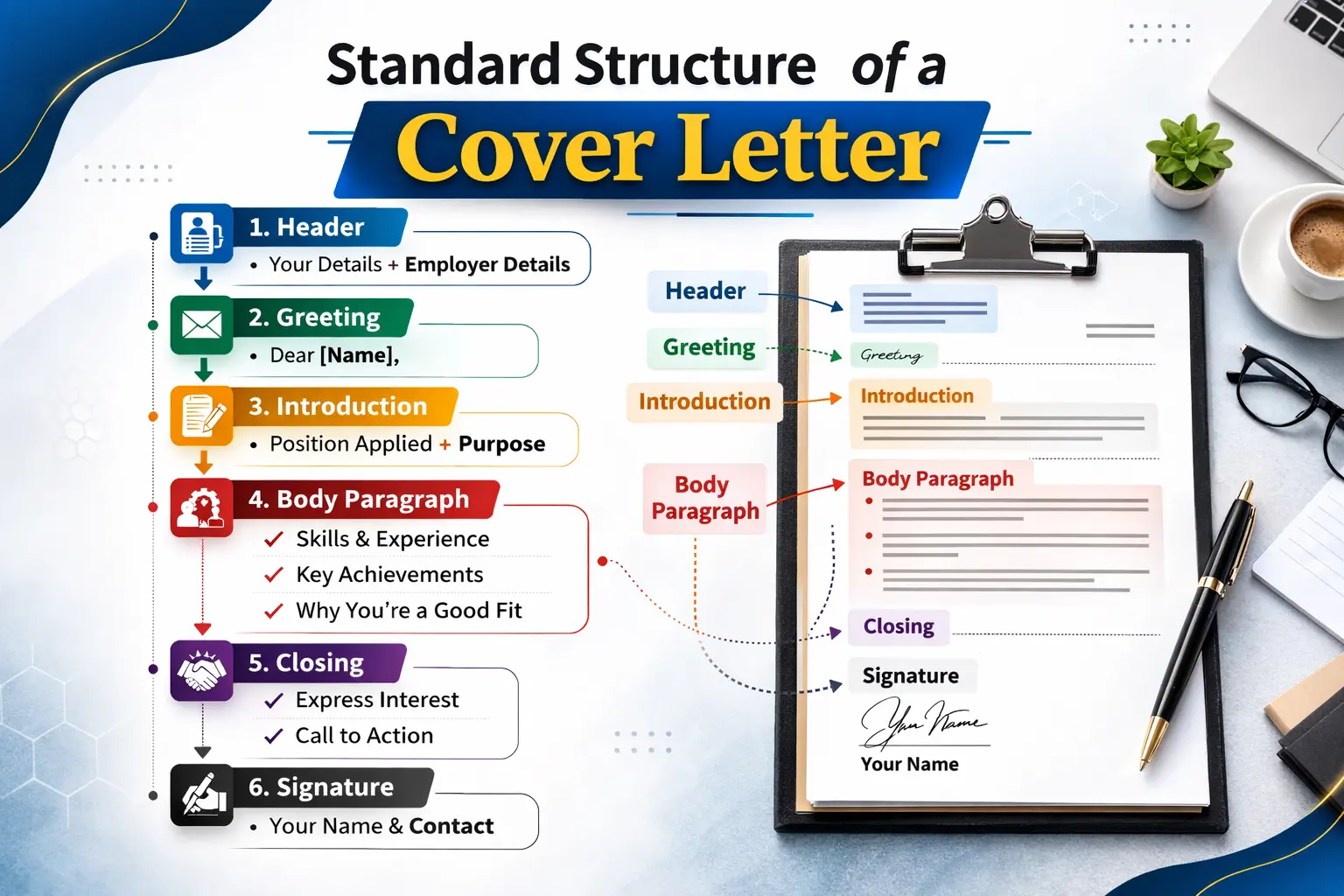
Most business cover letters are written in a clear and simple way. Keeping this structure makes it easier to read and lets employers quickly go over the information.
Cover Letter Body Structure
First Part or Oppening Part
The first paragraph should introduce the person applying for the job and make it clear what job they are applying for. This part gives the reader immediate context.
A strong opening makes a good first impression and makes the employer want to read the rest of the letter.
The Middle Section
The middle section lists the most important qualifications, skills, and professional accomplishments. This paragraph should show how the candidate's past work fits with the job requirements.
Instead of going over their resume again, applicants should focus on the strengths that show how they could be useful to the company.
Section for Closing
The last paragraph should thank the employer for their time and say that you would like to talk to them again. A polite closing statement shows that you are professional and respectful.
Ending the letter with confidence and thanks can make a good impression on hiring managers.
How to Write a Good Cover Letter?
To write a good cover letter, you need to be clear, organized, and professional. Following a few simple rules can make the letter much better.
Things You Should Do or Not to Do:
Things You Should Do | Things You Shouldn't Do |
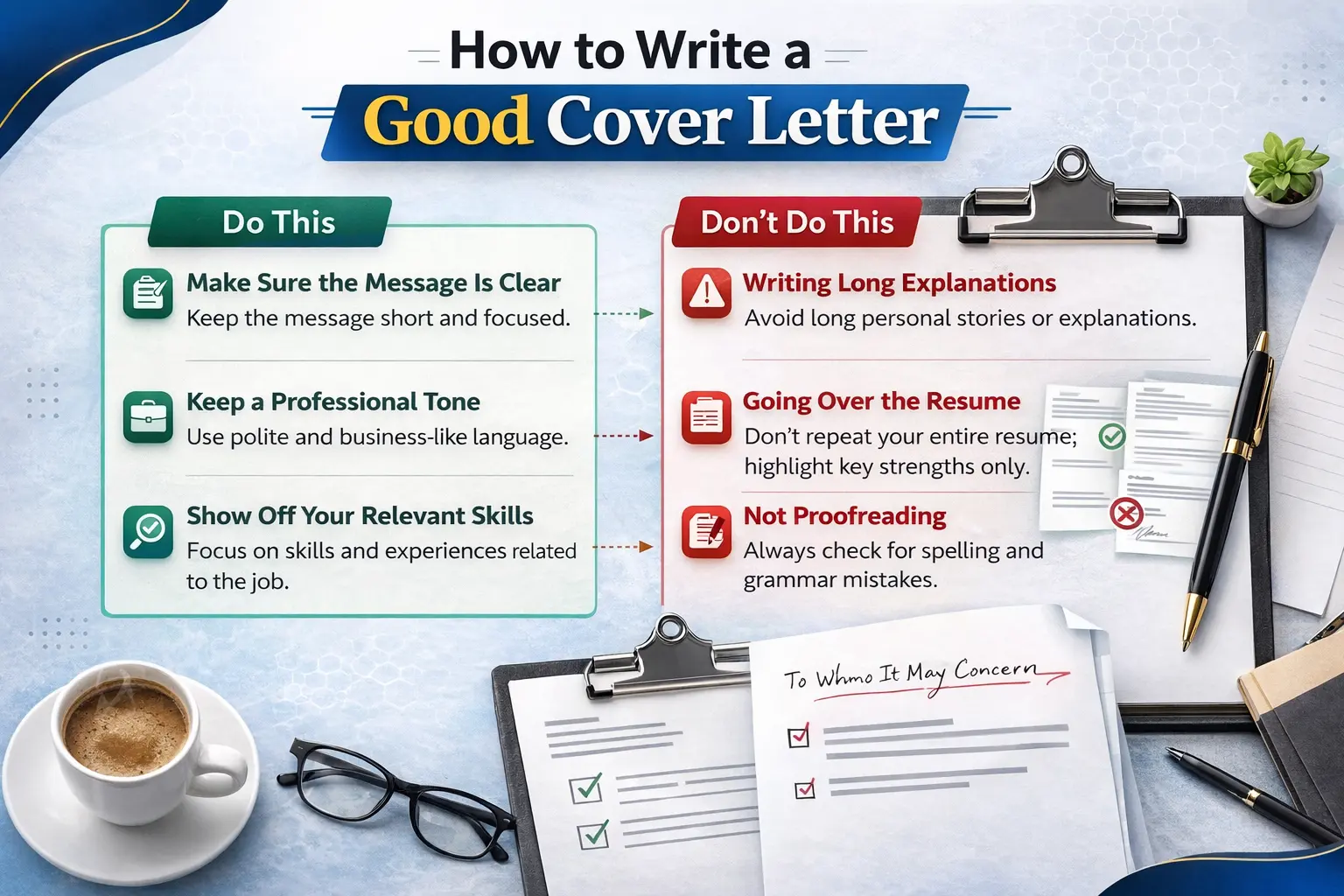
Make Sure the Message is Clear Employers often have to look at a lot of applications in a short amount of time. It is easier to read and understand a letter when the message is clear and short.
Don't include extra information; just give the important facts. |
Writing long explanations Some candidates write long personal stories. Employers like short, direct letters that make it clear what the letter is about. |
|
Keep a Professional Tone You should use polite and professional language in a cover letter. Stay away from slang, informal phrases, or explanations that are too emotional. A professional tone shows that you are serious about the opportunity and respect it. |
Going over the Resume A cover letter should add to your resume, not repeat it. Instead of listing all of your experiences again, focus on your key strengths. |
|
Show Off Your Relevant Skills The cover letter should focus on skills and experiences that are directly related to the job. This makes it easy for the employer to see how valuable the candidate is. Giving specific examples can make the message stronger. |
Not proofreading Mistakes in spelling, grammar, or the name of the company can make a bad impression. Always read the letter carefully before sending it. |
Example of a Cover Letter
Here are two cover letters: one for a software engineer and one for a job that is often used.
1. Sample Cover Letter for a Software Engineer
- Your Name
- Your Address
- City, State, ZIP Code
- Email: [your.email@example.com]
- Phone: +X XXX XXXX XXX
- Date: [Insert Date]
- To
- The Hiring Manager
- [Company Name]
- [Company Address]
- Subject: Application for the Position of Software Engineer
- Dear Hiring Manager,
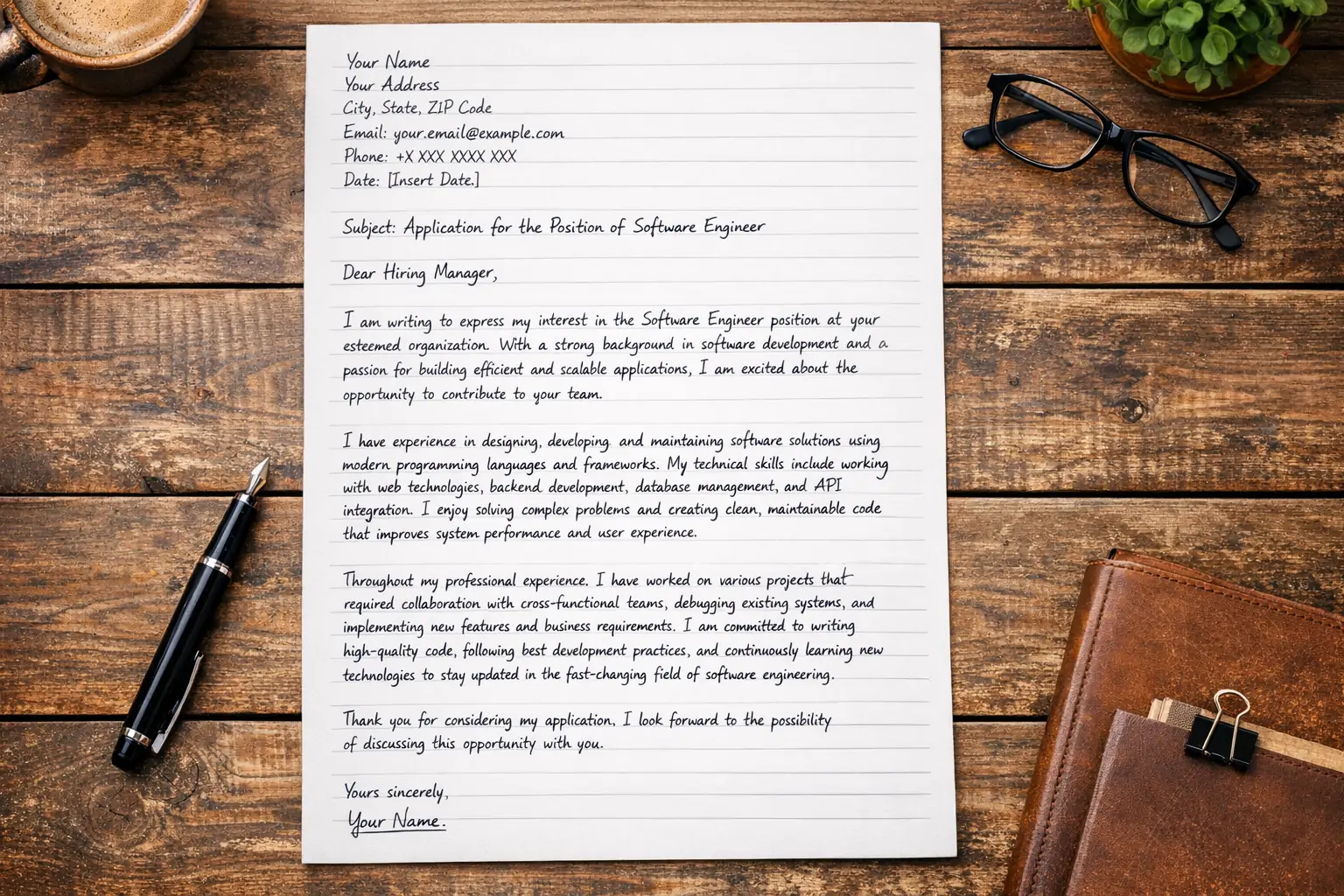
- I am writing to express my interest in the Software Engineer position at your esteemed organization. With a strong background in software development and a passion for building efficient and scalable applications, I am excited about the opportunity to contribute to your team.
- I have experience in designing, developing, and maintaining software solutions using modern programming languages and frameworks. My technical skills include working with web technologies, backend development, database management, and API integration. I enjoy solving complex problems and creating clean, maintainable code that improves system performance and user experience.
- Throughout my professional experience, I have worked on various projects that required collaboration with cross-functional teams, debugging existing systems, and implementing new features based on business requirements. I am committed to writing high-quality code, following best development practices, and continuously learning new technologies to stay updated in the fast-changing field of software engineering.
- I am confident that my technical abilities, problem-solving skills, and dedication to continuous improvement would make me a valuable addition to your development team. I would welcome the opportunity to discuss how my skills and experience align with your company’s goals.
- Thank you for considering my application. I look forward to the possibility of discussing this opportunity with you.
- Yours sincerely,
- Your Name
2. Example Cover Letter (For General Use)
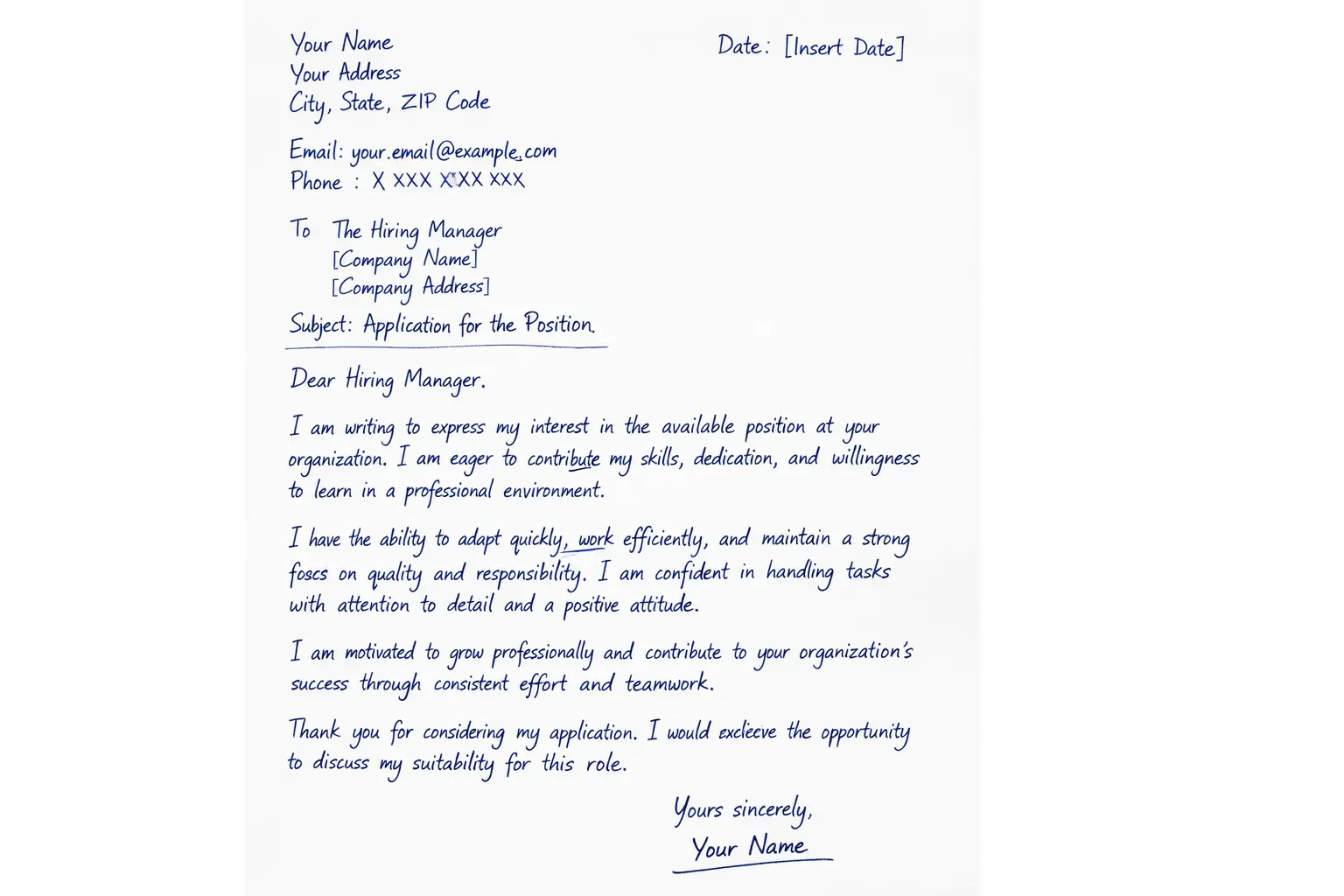
- Your Name
- Your Address
- City, State, ZIP Code
- Email: [your.email@example.com]
- Phone: +X XXX XXXX XXX
- Date: [Insert Date]
- To
- The Hiring Manager
- [Company Name]
- [Company Address]
- Subject: Application for the Position
- Dear Hiring Manager,
- I am writing to express my interest in the available position at your organization. I am eager to contribute my skills, dedication, and willingness to learn in a professional environment.
- I have the ability to adapt quickly, work efficiently, and maintain a strong focus on quality and responsibility. I am confident in handling tasks with attention to detail and a positive attitude.
- I am motivated to grow professionally and contribute to your organization’s success through consistent effort and teamwork.
- Thank you for considering my application. I would welcome the opportunity to discuss my suitability for this role.
- Yours sincerely,
- Your Name
How to generatea cover letter that is unique to you?
Personalization is the key to writing a cover letter that stands out. First, learn about the job and then talk about your skills and experience that are relevant.
Don't use the same resume or a generic template. Instead, clearly explain why you would be a good fit for the job and how you could help the company. You should write a strong cover letter for each job in a clear, professional way.You can also use our AI-powered letter generator to get things done faster. Just give it your name, work history, and other important information, and it will write a cover letter that is both professional and unique to you.
Also Read: 7 Common Cover Letter Mistakes and How to Avoid Them
In conclusion
It's important for people looking for work to know how to write a professional cover letter. A clear structure, a short message, and a professional tone can all help candidates make a good impression.