
We frequently assume that communication consists solely of speaking. We believe that if we speak clearly, persuasively, or just loudly enough, the message will be understood. In actuality, however, the recipient is more important in effective communication than the speaker. It has to do with connection and clarity.
Technical skills may get you an interview in today's workplace, but communication skills are what lead to a promotion. Gaining proficiency in these soft skills is the quickest route to career success, whether you're trying to communicate with challenging coworkers or pitch your ideas to the C-suite
Start putting these three suggestions into practice right now if you want to stand out professionally and avoid having your emails ignored or your ideas misinterpreted.
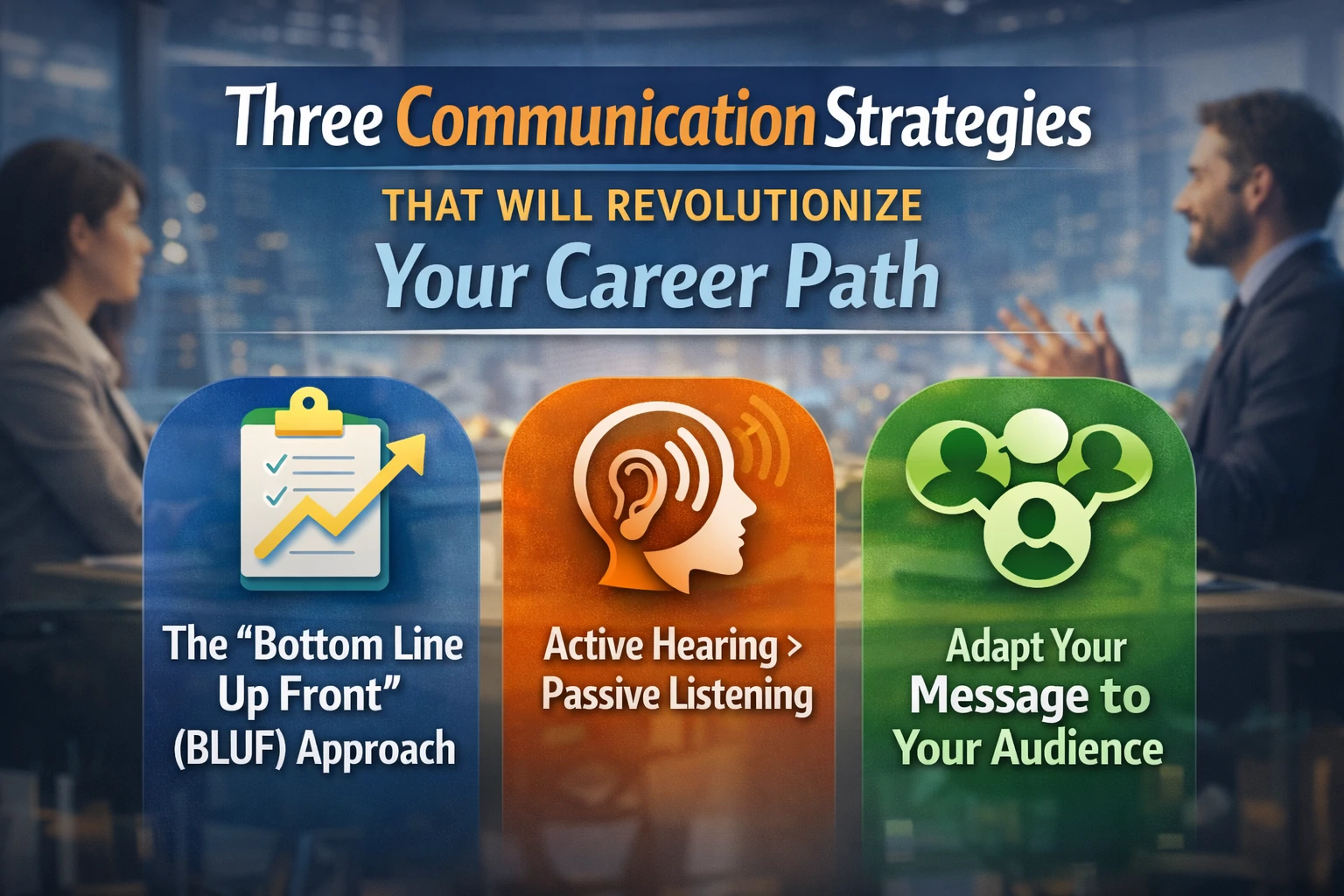
Three Ways to Talk That Will Change the Course of Your Career
With these 3 ways, it can change your career path:
1. The "Bottom Line Up Front" (BLUF) Approach
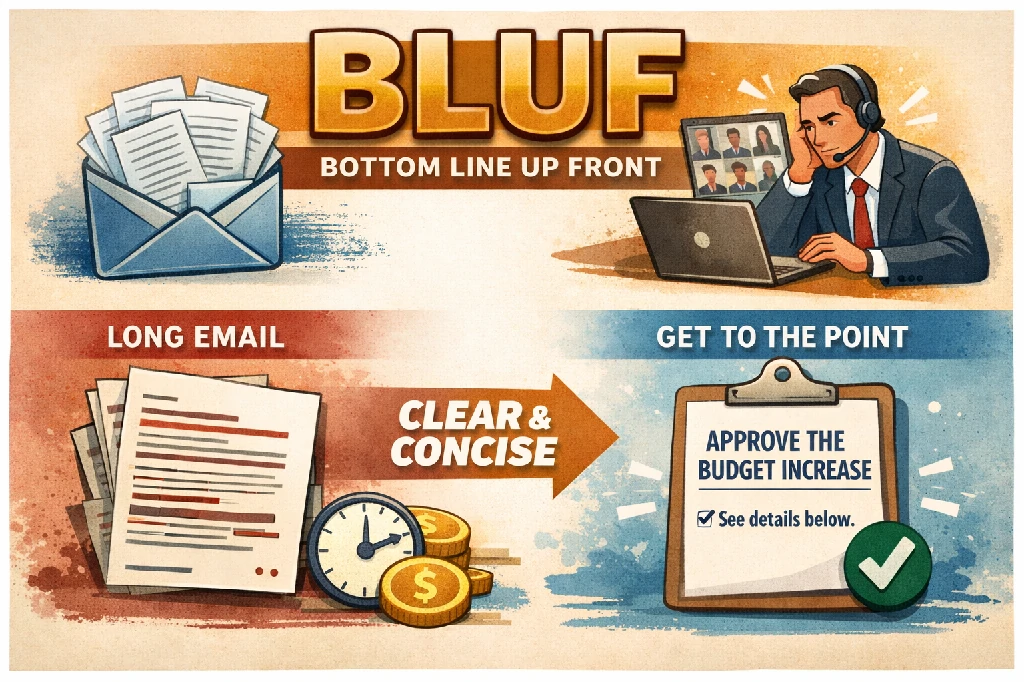
Money is time. The golden rule of business communication is this. Your manager or stakeholder doesn't have time to read a novel in the world of back-to-back Zoom calls and overflowing inboxes.
There is a reason why the BLUF Method is a corporate and military standard: it is effective. Don't bury the lead in the third paragraph of an email you send to your manager. Instead of beginning with "I hope you are having a good week..." and then listing your activities, get right to the point.
How to do it:
In the first sentence, state your conclusion, request, or suggestion. Next, give the background information or context that is required to support it.
- A poor example would be "I've been working on the Johnson account this week, and I ran into some issues with the budget, and I also wanted to update you on the timeline, but I think we need more resources."
- An excellent example (BLUF): "To make the deadline, I suggest we add an extra $5,000 to the Johnson account. Context: I've described the unforeseen shipping expenses we experienced below.
You respect the reader's time when you use BLUF. You present yourself as a clear thinker, which is necessary for leadership.
2. Active Hearing > Passive Listening
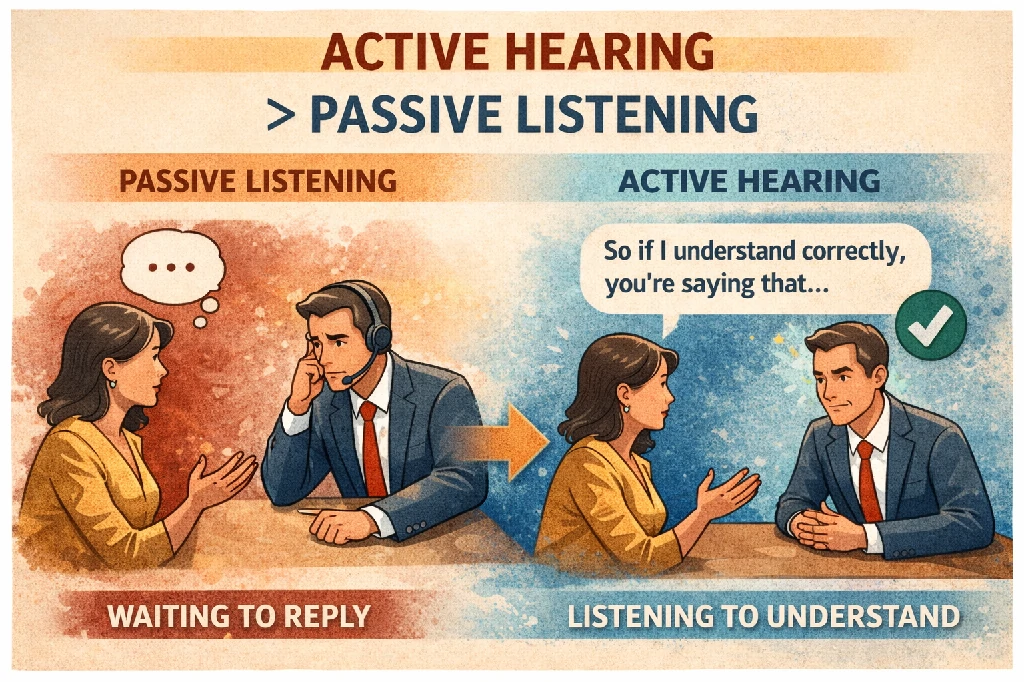
Hearing words and truly listening are two very different things. The majority of people simply wait for their turn to speak and prepare their rebuttal while the other person is still speaking. This is known as passive hearing. Misunderstandings and strained relationships at work result from this.
You must switch to active listening if you want to improve your communication abilities.
How to do it:
The next time you meet, try "listening to understand" instead of "listening to reply." Pay close attention to the speaker. Don't just offer your opinion after they're done. Instead, to ensure alignment, summarize what you heard.
- Using the phrase "So if I understand correctly, you're saying that [paraphrase their point]" is the technique. Is that correct?
- Why it works: This accomplishes two goals. It first verifies that you truly comprehended the brief. Second, it reduces conflict and fosters trust by making the other person feel heard and respected.
This one habit has the power to change your coworkers' perception of you from one of a rival to one of cooperation.
Also Read: As an employee, improving communication skills in the workplace is essential for professional growth.
3. Adapt Your Message to Your Audience
Translators are excellent communicators. They adjust the message based on their understanding that various stakeholders have different priorities.
How to do it:
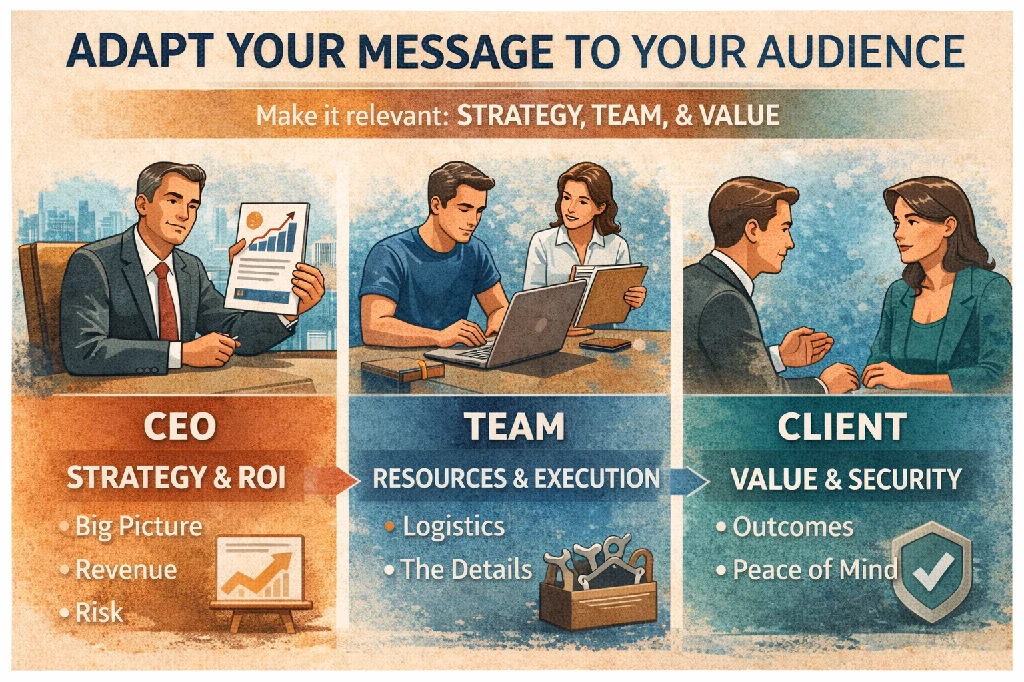
"What does this person care about most?" is a question you should ask yourself before sending an email or setting up a meeting.
- A CEO should receive a high-level message that emphasizes big-picture strategy, ROI, revenue, and risk. They only need to understand how it affects the bottom line, not the code you wrote.
- Your team should receive a message that emphasizes resources, logistics, execution, and the "how." To carry out their duties efficiently, they require the specifics.
- Value, outcomes, and security should be the main points of a client message.
You remove friction when you translate your thoughts into the listener's particular language. You make it simple for them to respond "yes."
The Final Score
Success in the workplace is rarely an accident. It is the culmination of your problem-solving and interpersonal behaviors. You can distinguish yourself as someone who is both competent and emotionally intelligent by putting these three communication strategies into practice: leading with the bottom line, genuinely listening, and customizing your message.