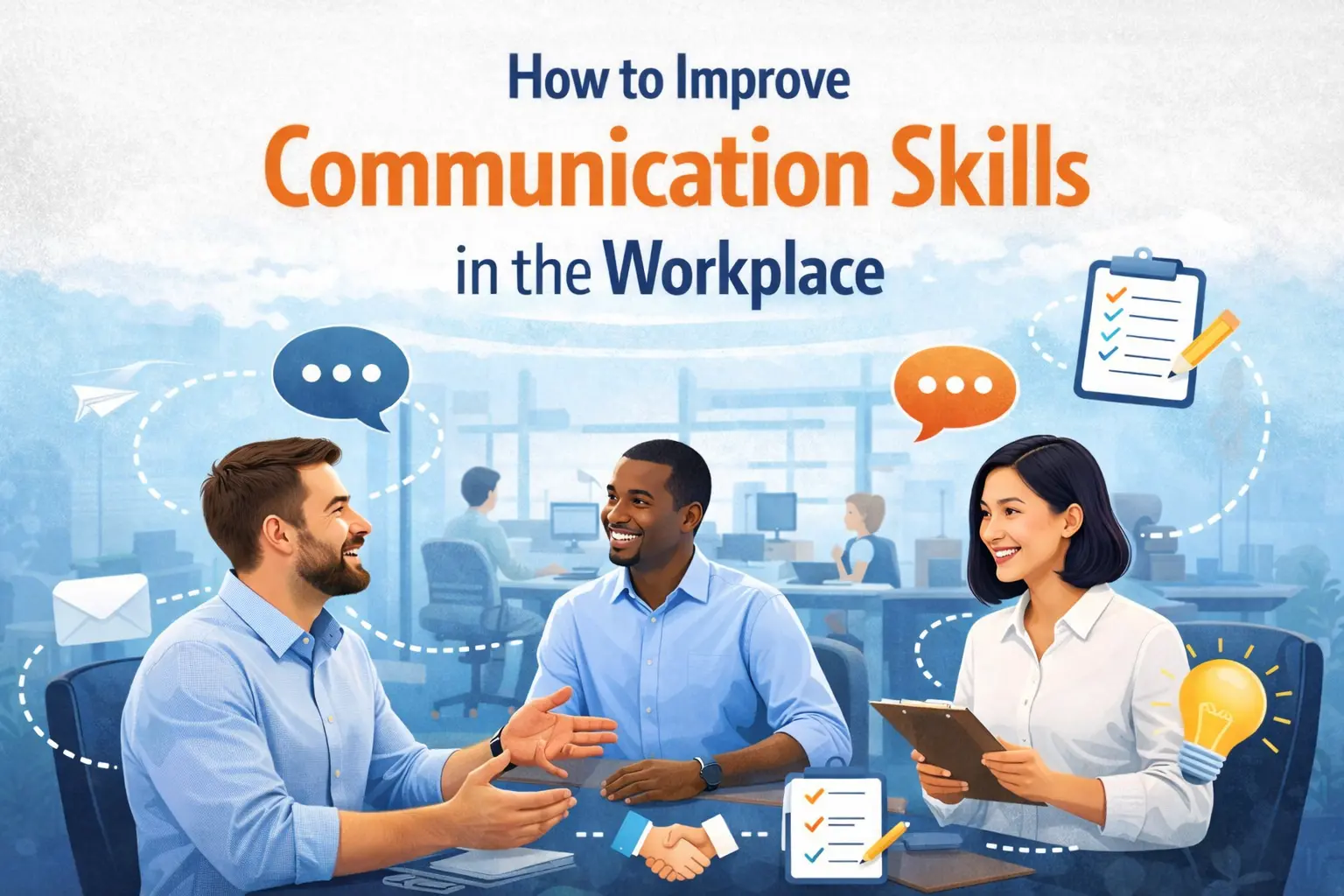
To build strong professional relationships and get work done quickly, you need to be able to communicate well at work. When employees communicate clearly and effectively, they can work together better, avoid misunderstandings, and help make the workplace a better place to be.
Good communication at work also helps keep employees happy and productive. Employees can share ideas, settle disagreements, and help the company reach its goals more effectively when they know how to communicate in a professional way.
Why it's important to have good communication skills at work?
Communication skills at work help workers get their ideas across clearly and understand what others are saying. Good communication in the workplace makes sure that information moves easily between departments, teams, and management.
Professionals who are good at communicating at work are more likely to earn the trust of their coworkers and bosses. These skills help workers take care of their duties, take part in discussions, and help make decisions.
Companies that promote good communication in the workplace often have better teamwork and happier employees.
Listen actively
One of the most important communication skills at work is active listening. It means giving the speaker your full attention, understanding what they say, and responding in a thoughtful way.
Careful listening can help employees avoid misunderstandings and make communication at work better. Listening also improves relationships between employees because it shows that you value and respect them.
Be Straightforward and Clear
In the workplace, it's important to communicate clearly. When employees give instructions or share information, they should keep their messages short and to the point.
Don't use hard-to-understand words or extra information. Clear communication makes teams work better and gets more done.
Pick the Right Way to Talk to People
Choosing the right way to talk to people at work is also important for good communication. Some talks need to happen in person, while others can happen over email or messaging apps.
Using the right way to talk makes sure that messages are understood and lowers the risk of confusion.
Improve Written Communication

Written communication is widely used in workplaces through emails, reports, and internal documentation. Strong writing skills support effective communication in the business environment.
When writing messages, employees should pay attention to how clear, grammatically correct, and professional they sound. Checking messages before sending them helps avoid mistakes and confusion.
Encourage people to talk to each other
Companies that encourage open communication make the workplace a healthier place to be. Workers should feel free to talk about problems, share ideas, and ask questions.
Open communication at work helps teams come up with new ideas and solve problems faster.
Also Read: Three powerful communication strategies can transform your career path and boost professional growth. Need leave, promotion, or increment letters? Create personalized and professional documents instantly using our LetterMate letter generator tool.
Communicate to strengthen relationships with employees
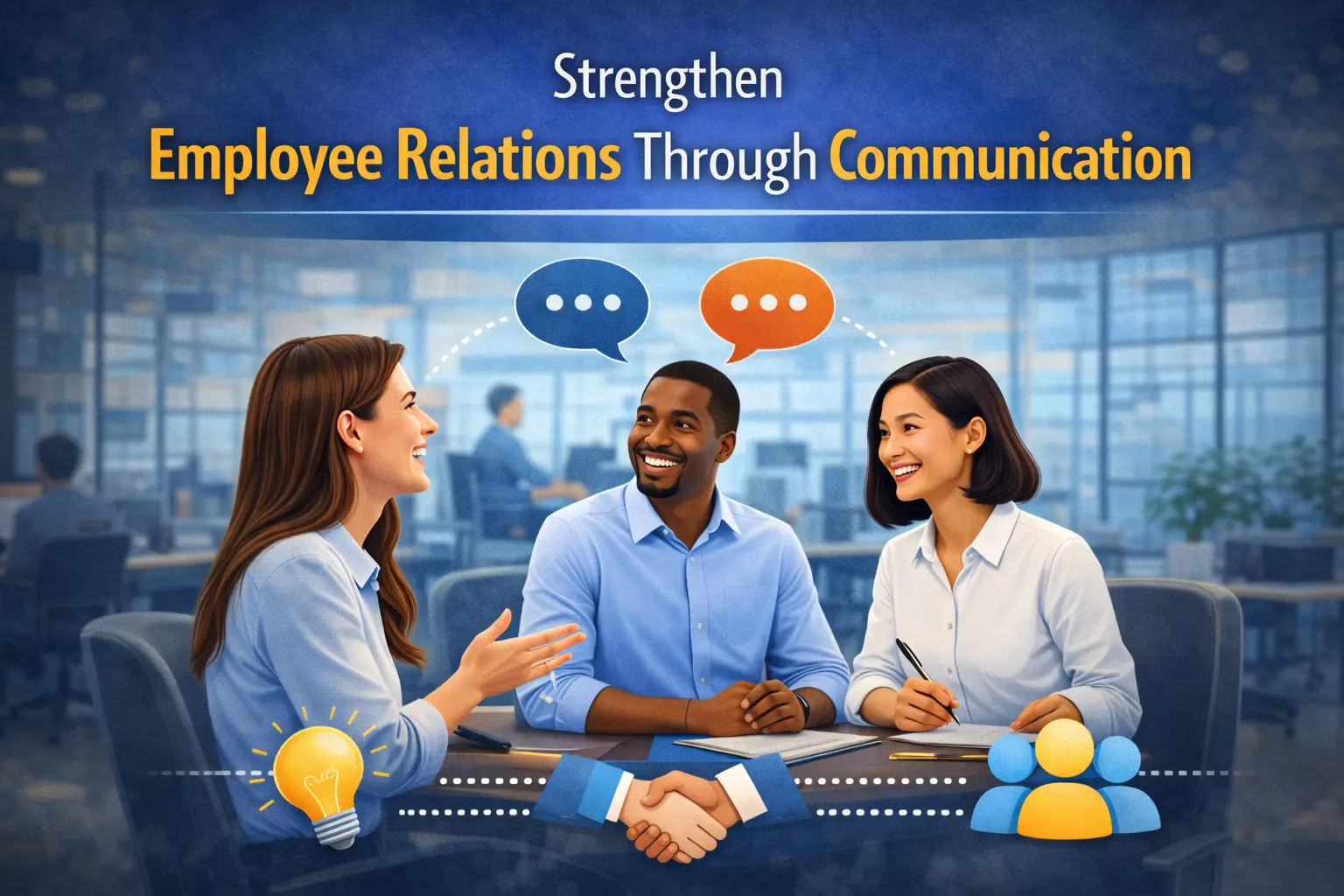
Strong employee relations start with good communication. When workers talk to each other in a polite and professional way, their relationships at work get better.
Managers and team members who encourage open conversations and helpful criticism build a culture of trust and teamwork.