
What is an Employee Warning Letter?
An employee warning letter is a formal written notice from an employer or HR department to an employee about their bad behavior, poor work, or breaking workplace rules. It is an official record of the problem and makes clear what needs to be done to fix it.
A written warning is more serious than a verbal warning because it goes into the employee's personnel file. It makes sure that the organization is open, responsible, and has the right paperwork.
Why Warning Letters Are Important?
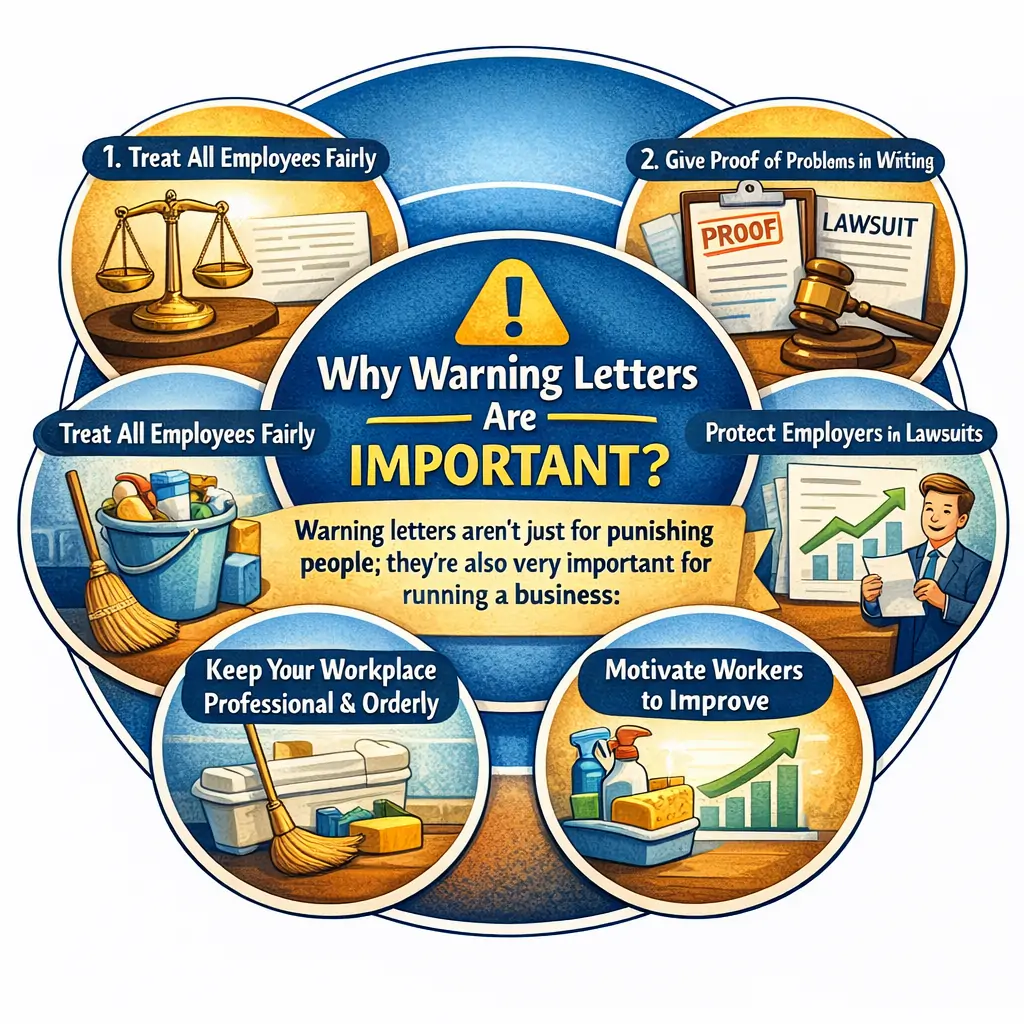
Warning letters aren't just for punishing people; they're also very important for running a business:
- Make sure that all employees are treated fairly.
- Give proof of problems in writing
- Safeguard employers in court cases
- Motivate workers to do better
- Keep your work area clean and professional.
When Should You Write a Warning Letter?
If an employee keeps not meeting expectations or breaking company rules, they should get a warning letter. Some common situations are:- Being late or missing work often
- A drop in the quality or quantity of work
- Breaking the rules or code of conduct at work
- Using company resources in the wrong way
- Disobedience or acting unprofessionally
- Harassment or bad behavior at work
- Not meeting deadlines or goals
Types of Warning Letters
This is the initial formal notice. It informs the employee about the issue and gives them a chance to correct their behavior.
Issued if the employee fails to improve after the first warning. It indicates that the issue is continuing and requires urgent attention.
This is the last stage before termination. It clearly states that failure to improve may result in dismissal or strict disciplinary action.
The standard format for a warning letter
A professional warning letter should have a set structure:- Letterhead for the company
- Date of release
- Name and job title of the employee
- Subject line
- A description of the problem
- Mention of any previous warnings
- Improvements that are expected
- A schedule for making things better
- What happens if you don't comply
- Final statement
- Signature of authority
Key Elements Explained
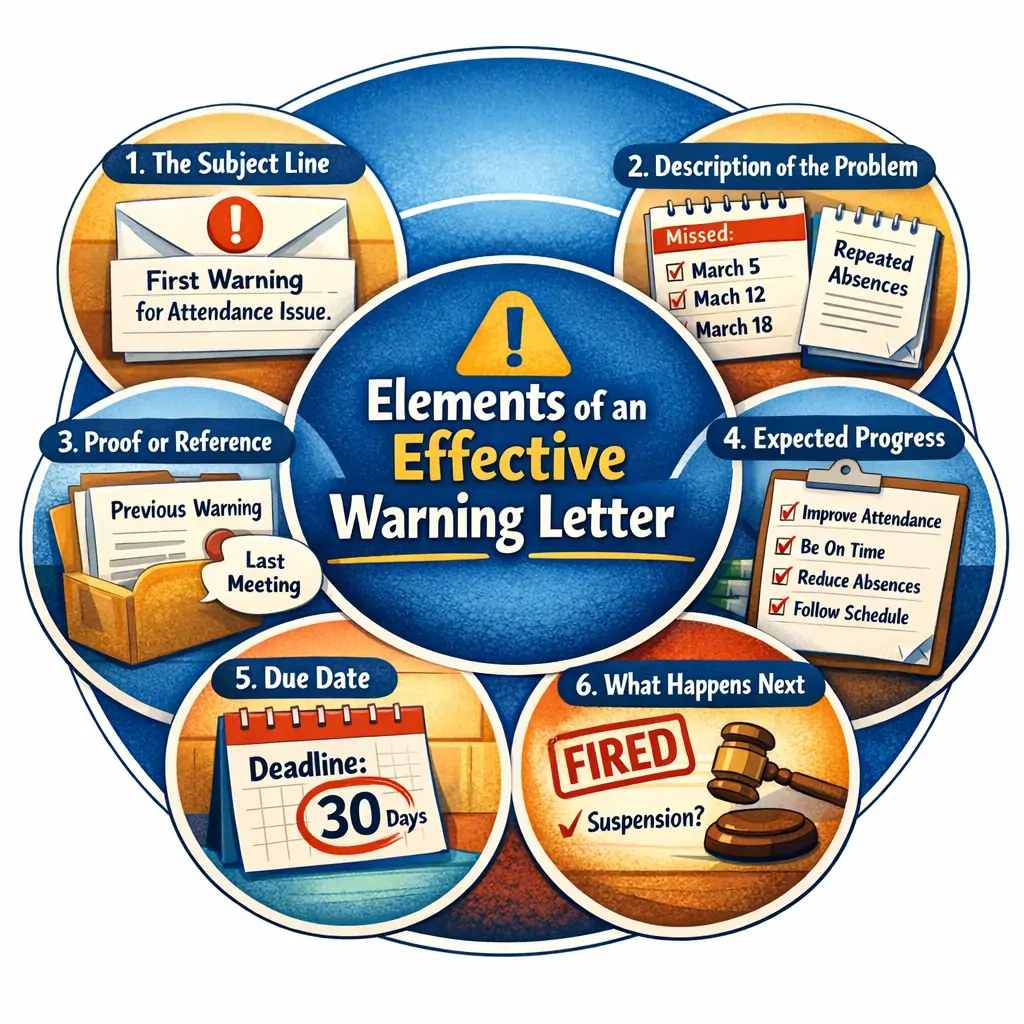
Clearly say what the warning is for, like "First Warning for Attendance Issue."
2. Description of the Problem
Be clear. Instead of vague statements, talk about specific dates, events, and patterns.
3. Proof or Reference
If you have had any previous conversations or warnings, include those details.
4. Expected Progress
Make it clear what the worker needs to do differently.
5. Due date
Set a deadline for improvement (for example, 30 days).
6. What Happens Next
Talk about possible actions, like firing or suspending someone.
Sample of Warning Letters
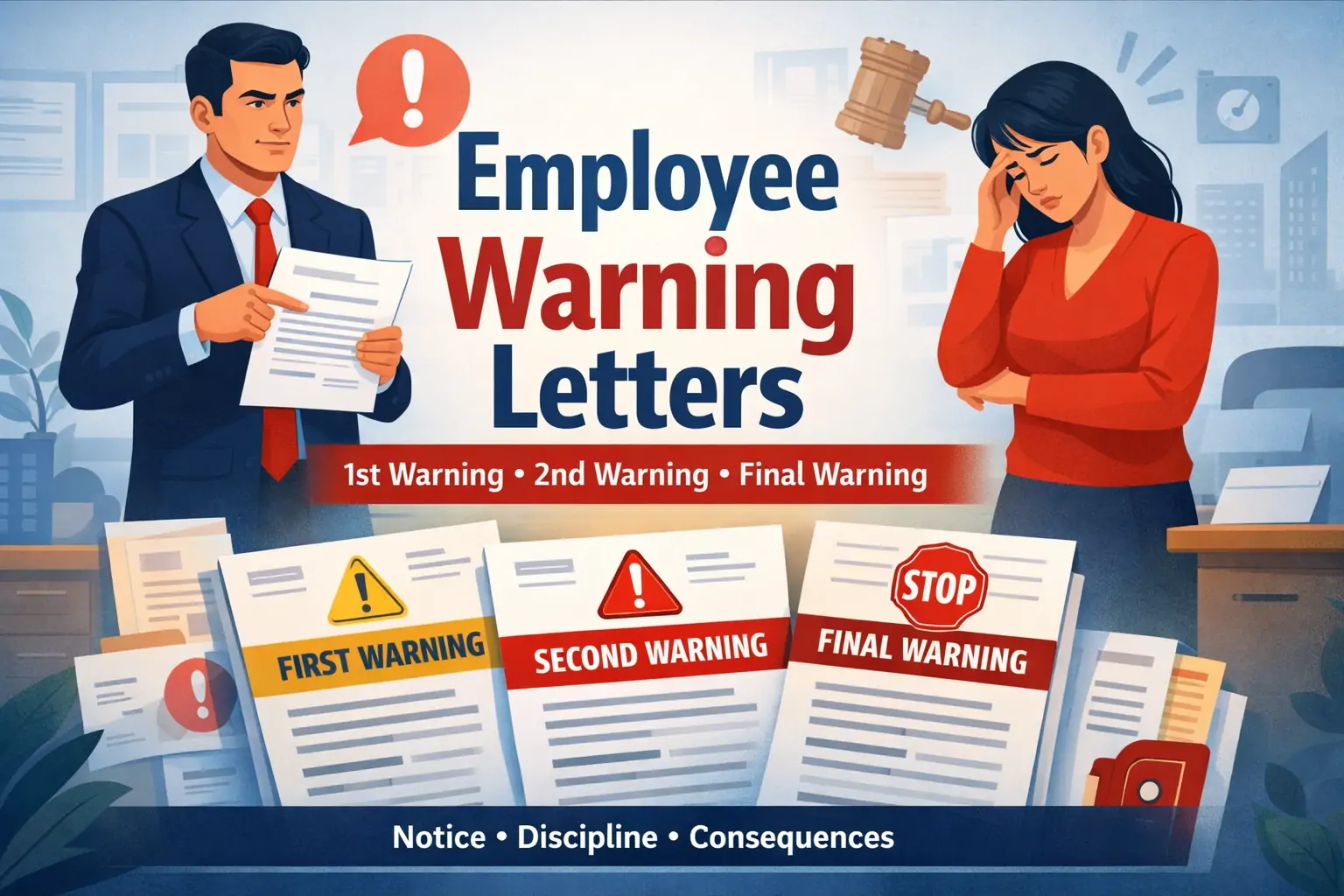
We have made three warning letters: the First Warning Letter, the Second Warning Letter, and the Final Warning Letter.
1st Warning Letter to Employee (Sample)
- [Company Name]
- [Company Address]
- Date: [Insert Date]
- Employee Name: [Employee Name]
- Employee ID: [ID]
- Designation: [Job Title]
- Department: [Department Name]
- Subject: First Warning for Misconduct
- Dear [Employee Name],
- This letter serves as a formal warning regarding your recent conduct. It has been observed that you have been consistently arriving late to work on multiple occasions since [mention dates].
- Despite prior verbal reminders, there has been no noticeable improvement. This behavior is not in line with company policies and is affecting workplace productivity.
- You are expected to improve your attendance immediately and adhere strictly to company working hours. Your performance will be monitored for the next 14 days.
- Failure to show improvement may result in further disciplinary action, including a second or final warning.
- Please treat this matter seriously and ensure compliance moving forward.
- Sincerely,
- [Manager Name]
- [Designation]
- [Company Name]
Employee Acknowledgment
I acknowledge that I have received this warning letter.
Signature: ____________________
Date: ____________________
Second Warning Letter to Employee (Structured Format)
- [Company Name]
- [Company Address]
- Date: [Insert Date]
- Employee Name: [Employee Name]
- Employee ID: [ID]
- Designation: [Job Title]
- Department: [Department Name]
- Subject: Second Warning for Continued Attendance Issues
- Dear [Employee Name],
- Following our previous warning dated [insert date], it has been observed that there has been insufficient improvement in your attendance. You have continued to arrive late on multiple occasions, specifically on [mention dates if needed].
- Despite prior communication, your punctuality has not met the expected standards. This ongoing issue is negatively affecting team performance and project timelines.
- You are hereby instructed to:
- - Report to work on time consistently
- - Follow company attendance policies strictly
- -Inform your supervisor in advance in case of any unavoidable delay
- Your attendance and behavior will be closely monitored over the next 7 days from the date of this letter.
- Failure to demonstrate immediate and sustained improvement may result in a final warning or further disciplinary action, as per company policy.
- Please treat this matter with urgency and take corrective steps immediately.
- Sincerely,
- [Manager Name]
- [Designation]
- [Company Name]
Employee Acknowledgment - I acknowledge that I have received this warning letter.
- Signature: ____________________
- Date: ____________________
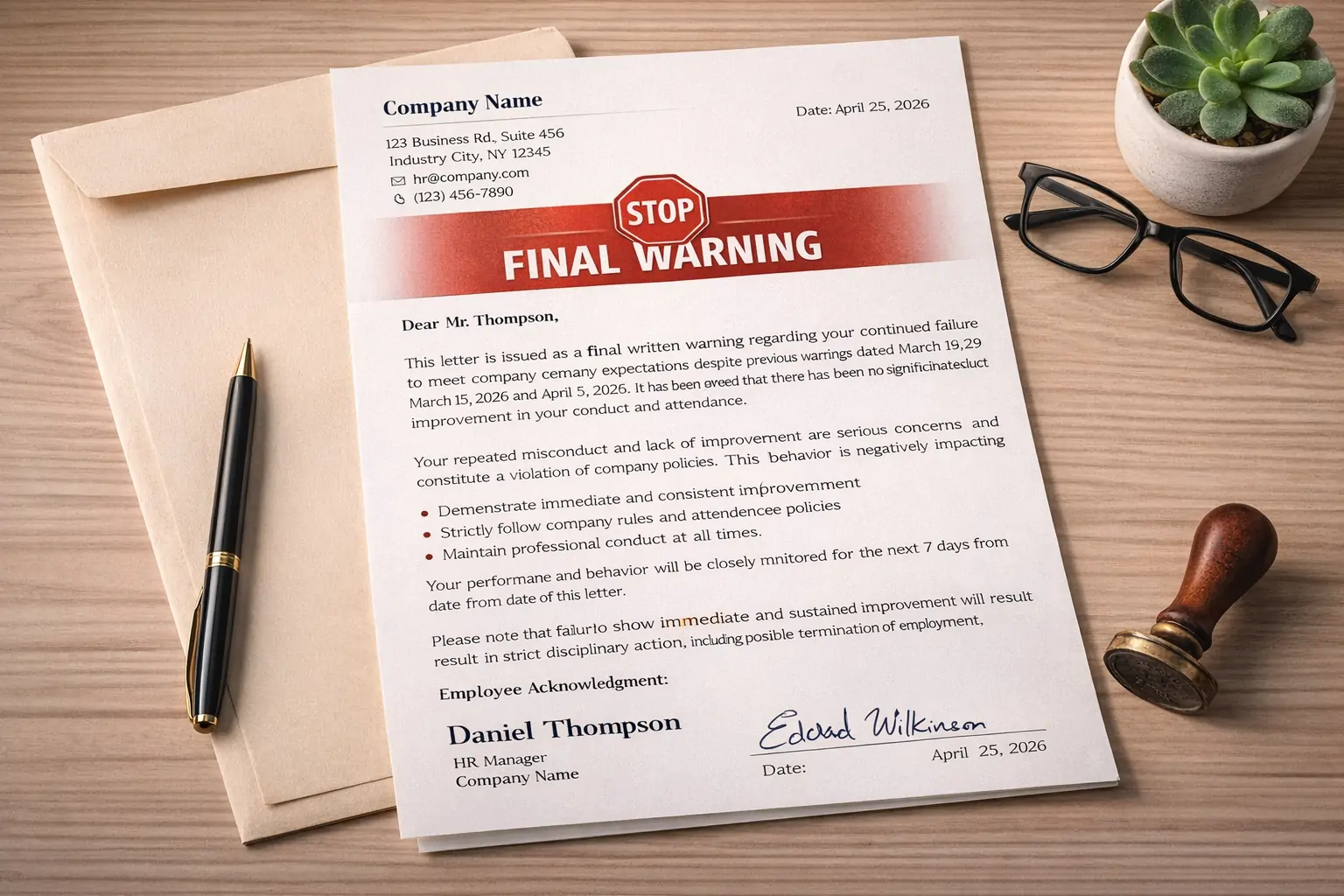
Final Written Warning Letter (Structured Format)
- [Company Name]
- [Company Address]
- Date: [Insert Date]
- Employee Name: [Employee Name]
- Employee ID: [ID]
- Designation: [Job Title]
- Department: [Department Name]
- Subject: Final Warning Before Disciplinary Action
- Dear [Employee Name],
- This letter is issued as a final written warning regarding your continued failure to meet company expectations despite previous warnings dated [mention dates]. It has been observed that there has been no significant improvement in your conduct and attendance.
- Your repeated misconduct and lack of improvement are serious concerns and constitute a violation of company policies. This behavior is negatively impacting workplace discipline, team productivity, and overall efficiency.
- You are hereby instructed to:
- - Demonstrate immediate and consistent improvement
- - Strictly follow company rules and attendance policies
- - Maintain professional conduct at all times
- Your performance and behavior will be closely monitored for the next 7 days from the date of this letter.
- Please note that failure to show immediate and sustained improvement will result in strict disciplinary action, including possible termination of employment, as per company policy.
- This is your final opportunity to correct your behavior and meet the required standards.
- Sincerely,
- [Manager Name]
- [Designation]
- [Company Name]
- Employee Acknowledgment
I acknowledge that I have received this warning letter. - Signature: ____________________
- Date: ____________________
Tips for Writing an Effective Warning Letter
- Keep your tone professional and neutral.
- Don't let your feelings get in the way of the facts.
- Be clear and specific about the problem.
- Don't criticize people personally
- Give steps that can be taken to make things better
- Make the letter short but full of information.
- Always include what will happen next.
Best Practices for HR Warning Letters
- Follow a policy of progressive discipline
- Keep good records of all warnings.
- Make sure that all employees are the same.
- Hold meetings before sending letters
- Let workers explain or respond
- Keep copies in employee files
Things to think about legally
Employers should be careful when sending warning letters so they don't get into legal trouble:- Make sure the warning is fair and written down.
- Don't use language that is biased or discriminatory.
- Follow the rules of the company and the law.
- Give workers a chance to speak up
- Keep things private
Common Mistakes to Avoid
- Not being clear about the problem
- Using language that is angry or emotional
- Not bringing up past warnings
- Not being clear about what you expect
- Not paying attention to paperwork
- Making the letter too long or hard to understand
FAQs
1. Is a warning letter mandatory before termination?
In many organizations, yes. It ensures fairness and proper documentation before taking serious action.
2. Can an employee respond to a warning letter?
Yes, employees can submit a written explanation or appeal.
3. How long does a warning letter stay valid?
It depends on company policy, but typically 3 to 12 months.
4. Can a warning letter be removed?
Some companies remove warnings after consistent improvement over time.
5. Who can issue a warning letter?
Usually HR managers, team leads, or authorized supervisors.
Conclusion
A warning letter to an employee is an important part of keeping order and managing performance at work. It makes sure that problems are officially reported and recorded, and it gives workers a fair chance to get better.
Companies can deal with employee problems in a way that makes the workplace more productive by using a structured format, staying professional, and following HR best practices.