

In our professional life, we typically focus on the physical rewards, such the monthly pay, the yearly bonus, and the job title on our business cards. But when it's time to conclude one chapter and start another, the Experience Certificate is worth more than any compensation.
This one piece of paper is the link between your past performance and your future opportunity, whether you're changing jobs for advancement, higher studies, or a whole new profession. Let's talk about why this document is so crucial and, more significantly, what a good structure for an experience certificate looks like.
What is an experience certificate, really?
An experience certificate is a formal paper that a business gives to an employee when they leave the company. It is official proof of how long you worked, what your job was, and how long you worked there.In your work life, think of it as a character reference. It proves that you were on the team and gives a potential employer faith in what you've said on your CV.
What makes it a Non-Negotiable Document?
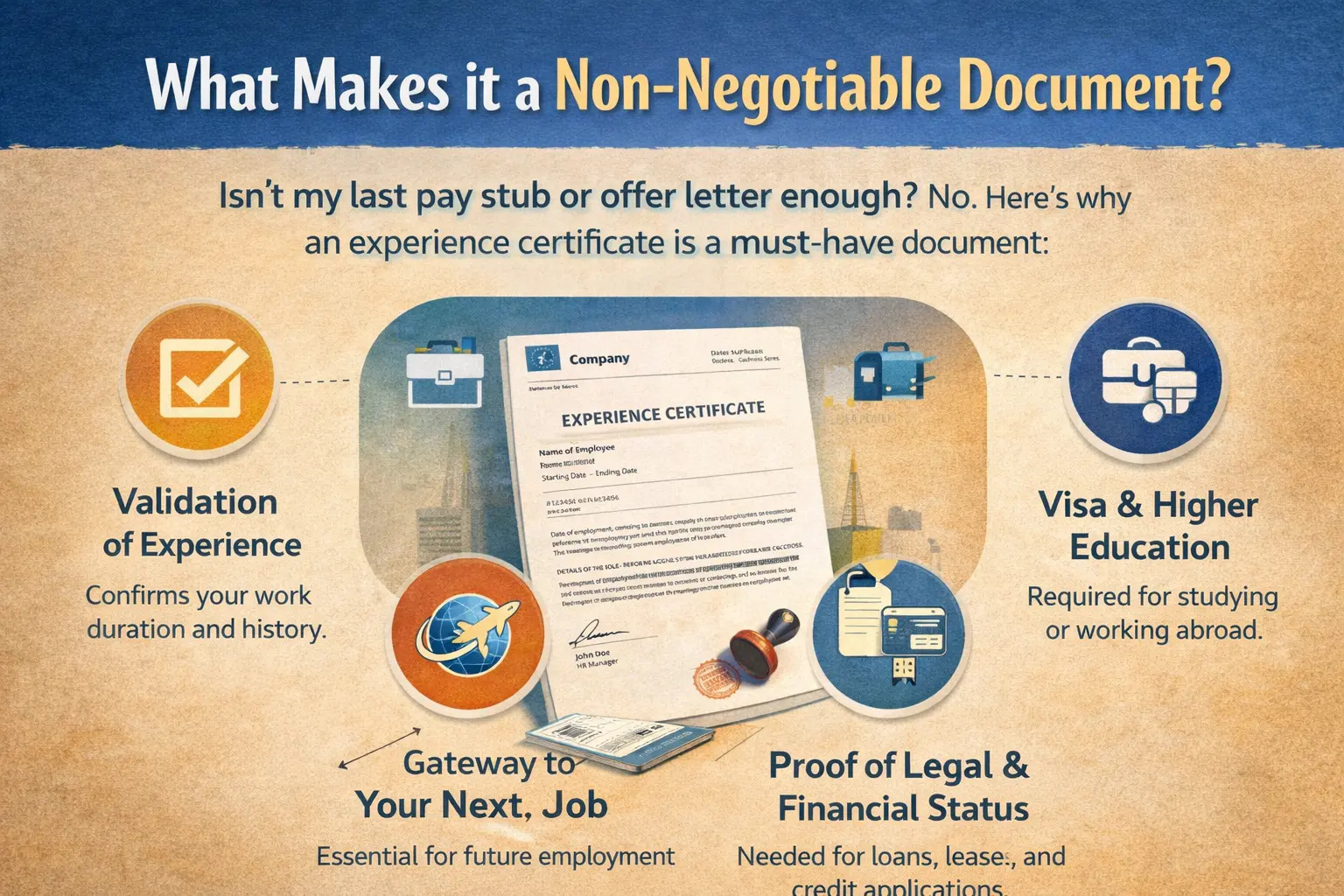
- Validation of Experience: An experience certificate is the truth serum in a world full of fake resumes. It validates the dates you started and ended your job, making sure there are no gaps or lies in your work history.
- Gateway to Your Next Job: Most HR departments have a standard operating procedure that starts with "Verify previous employment." This is the first step to getting your next job. If you can't get an experience certificate from your former job, it raises a red flag and could slow down or even stop the hiring process.
- Visa and Higher Education: If you want to study or work abroad, universities and embassies are very stringent regarding paperwork. To prove your work history, they need a clear "experince" letter format (which is commonly misspelled as "experince" in searches, but we know what they mean!).
- Proof of Legal and Financial Status: This is typically needed when applying for loans, credit cards, or even renting an apartment because it shows that you have a steady job history.
Breaking Down the Perfect Experience Certificate Format
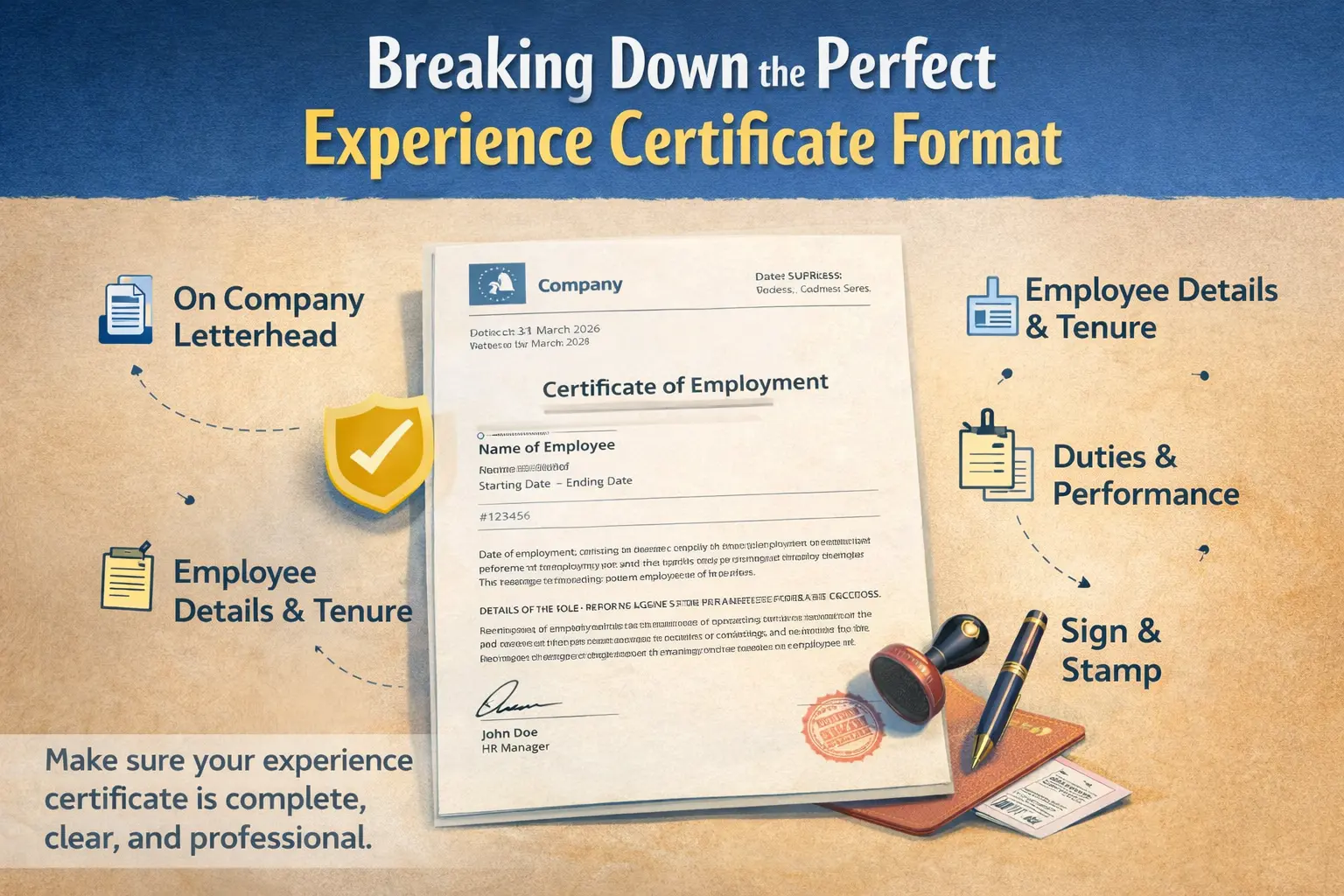
Letterhead from the company
It is necessary to print the paper on the organization's official letterhead. This includes the company's logo, official address, and phone number. The document seems informal and not real without this.Date of Issue
It is crucial to maintain track of the date the certificate is granted.The subject line
A concise subject line, like "Certificate of Employment" or "Experience Certificate."Information about Employees
This part tells you who the employee is. It should have:- The Employee's Full Name
- Employee ID or code (not required, but a nice idea)
Dates of employment
This is the main information. It needs to clearly say when the person joined and when they left. It should also say if the employee was a permanent worker, a trainee, or working on a contract.Duties and Roles
For example, "During his time there, he was in charge of managing the North American client portfolio, leading a team of five junior analysts, and making the quarterly reporting process more efficient."A excellent experience certificate has more than just dates. It gives a short description of the employee's job and the main tasks they are responsible for. This helps future employers see how much work you did.
Performance and Behavior (The Great Review)
This is where the boss says something good about the worker's character. Words like "hardworking," "sincere," "dedicated," and "a team player" mean something. It could also talk about specific things the person has done for the firm or accomplishments.Statement of Relief
A typical line that says the employee is no longer working for the company and that all of their commitments have been met.Sign and stamp
An authorized person, usually the HR Manager, Reporting Manager, or Director, must sign the certificate and put the corporate stamp on it. This last step makes it official.
A Sample Format for an Experience Certificate
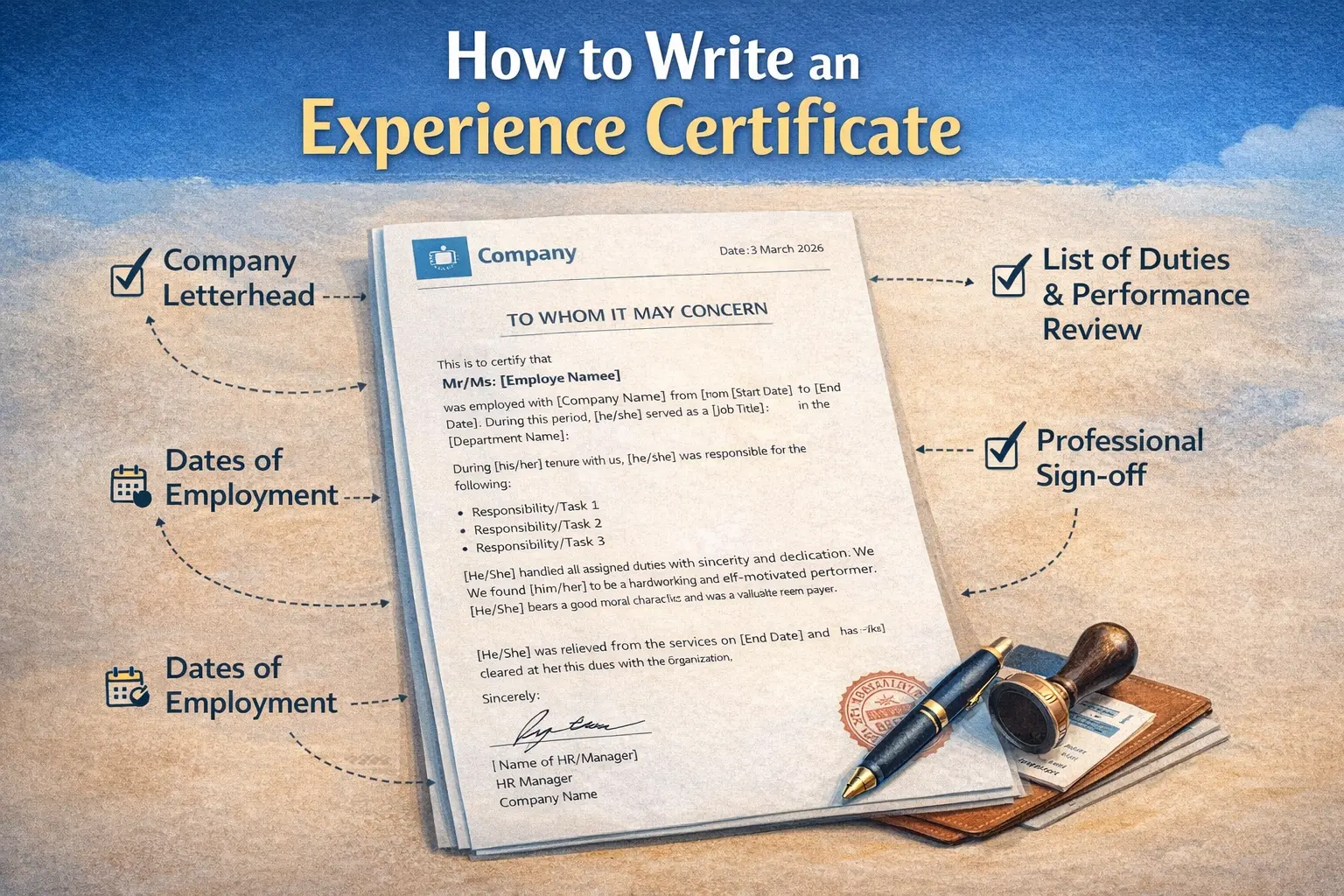
Here is a basic template that people often look for when they want an experience letter format:
- [Company Letterhead]
- Date: [DD/MM/YYYY]
- TO WHOM IT MAY CONCERN
- This is to certify that Mr./Ms. [Employee Name] was employed with [Company Name] from [Start Date] to [End Date] . During this period, [he/she] served as a [Job Title] in the [Department Name] .
- During [his/her] tenure with us, [he/she] was responsible for the following:
- Responsibility/Task 1
- Responsibility/Task 2
- Responsibility/Task 3
- [He/She] handled all assigned duties with sincerity and dedication. We found [him/her] to be a hardworking and self-motivated performer. [He/She] bears a good moral character and was a valuable team player.
- [He/She] was relieved from the services on [End Date] and has cleared all her/his dues with the organization.
- We wish [him/her] all the best in [his/her] future endeavors.
- Sincerely,
- (Signature)
- [Name of HR/Manager]
- [Designation]
- [Company Name]
- (Company Stamp)
Final Thoughts
Always get your experience certificate before you leave a work. It is the last piece of the puzzle that makes up your work history. Take care of it like you would your diploma or degree. Make sure you have both a paper copy and a digital backup.