The resignation letter is one of the most important documents in the fields of Human Resources and professional communication. As the saying goes, "Well done is better than well said," this is the last chapter of your time at a company. As remote and hybrid work models change the way people work together, knowing how to quit a job professionally is more important than ever in 2026.
Your resignation letter is more than just a formality; it's a way to keep relationships and get future references, whether you're leaving for a dream job, moving, or going back to school. This guide will show you everything you need to know to write the best resignation letter.
Why Your Letter of Resignation Is More Important Than You Think
It's important to know the "why" before we get into the templates. A resignation letter is the official, legal way to let your employer know that you are leaving. It makes a clear record of your last day of work and your plans to leave.But it's not just about the paperwork; it's also a tool for managing relationships.
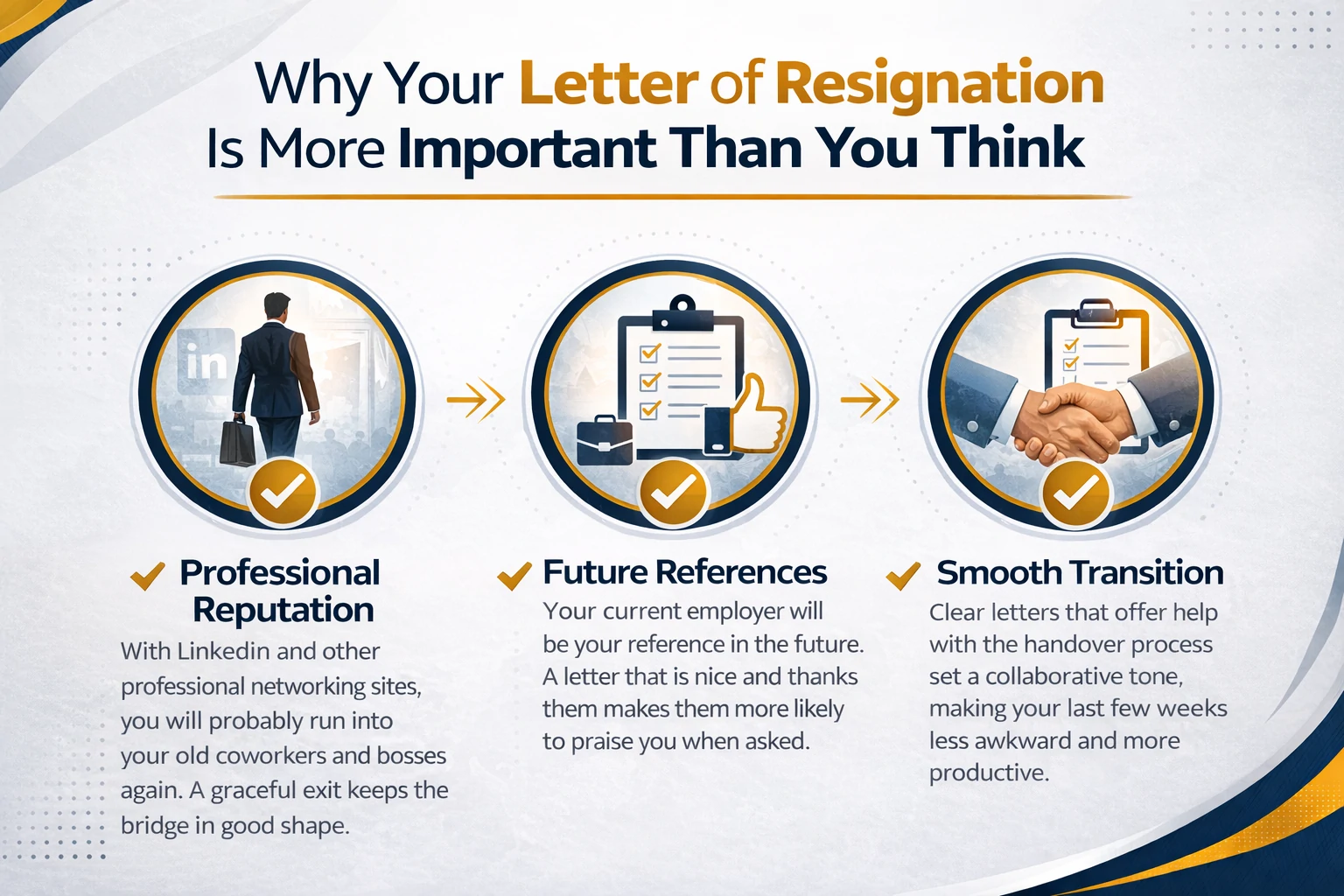
- Professional Reputation: With LinkedIn and other professional networking sites, you will probably run into your old coworkers and bosses again. A graceful exit keeps the bridge in good shape.
- Future References: Your current employer will be your reference in the future. A letter that is nice and thanks them makes them more likely to praise you when asked.
- Smooth Transition: Clear letters that offer help with the handover process set a collaborative tone, making your last few weeks less awkward and more productive.
The Four Most Important Parts of a Resignation Letter
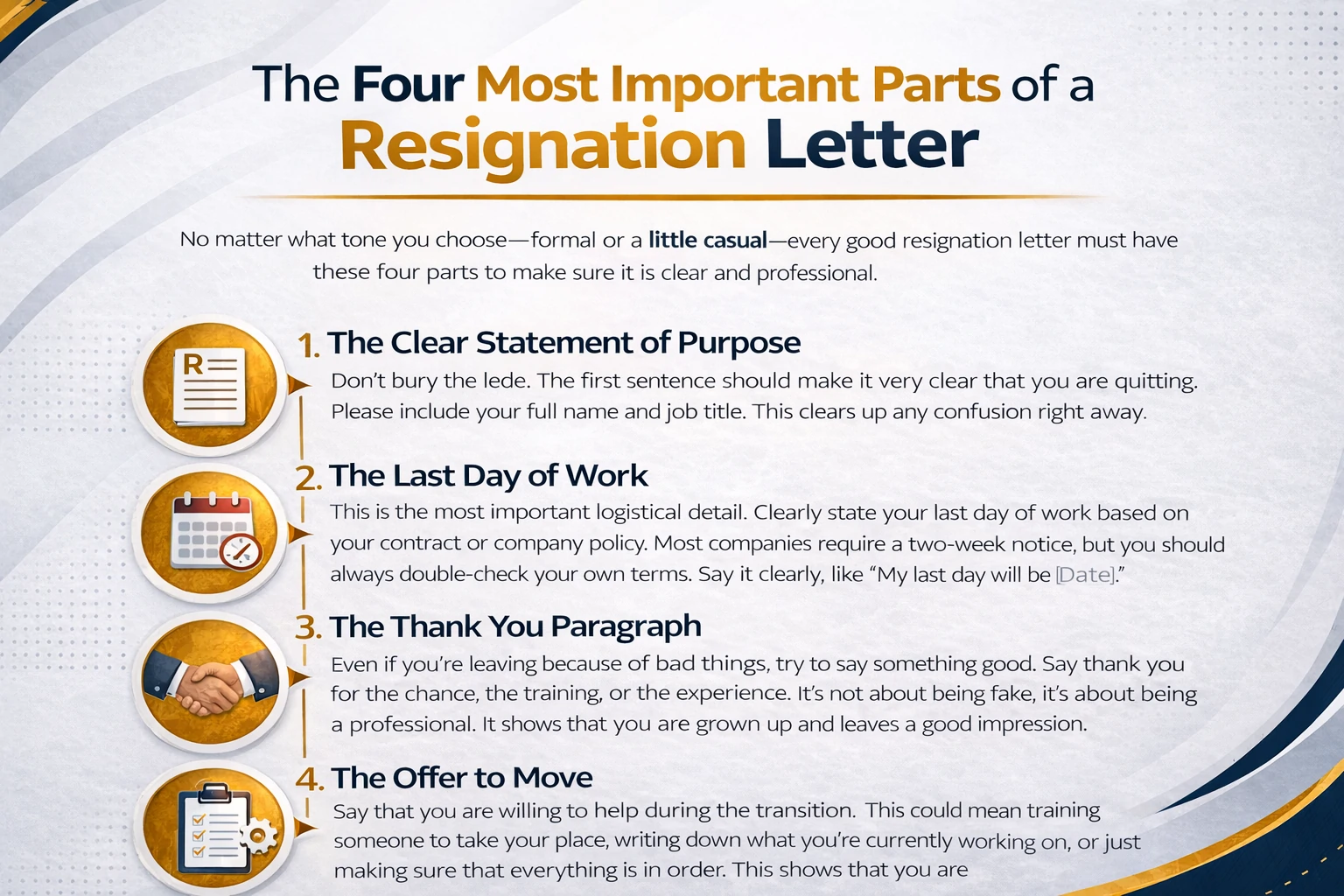
No matter what tone you choose—formal or a little casual—every good resignation letter must have these four parts to make sure it is clear and professional.
1. The Clear Statement of Purpose
Don't bury the lede. The first sentence should make it very clear that you are quitting. Please include your full name and job title. This clears up any confusion right away.2. The Last Day of Work
This is the most important logistical detail. Clearly state your last day of work based on your contract or company policy. Most companies require a two-week notice, but you should always double-check your own terms. Say it clearly, like "My last day will be [Date]."3. The Thank You Paragraph
Even if you're leaving because of bad things, try to say something good. Say thank you for the chance, the training, or the experience. It's not about being fake; it's about being a professional. It shows that you are grown up and leaves a good impression.4. The Offer to Move
Say that you are willing to help during the transition. This could mean training someone to take your place, writing down what you're currently working on, or just making sure that everything is in order. This shows that you are responsible and honest all the way to the end.
Resignation letter templates for all situations
Here are three different templates that you can use to get started. Don't forget to fill in the information in the brackets with your own.
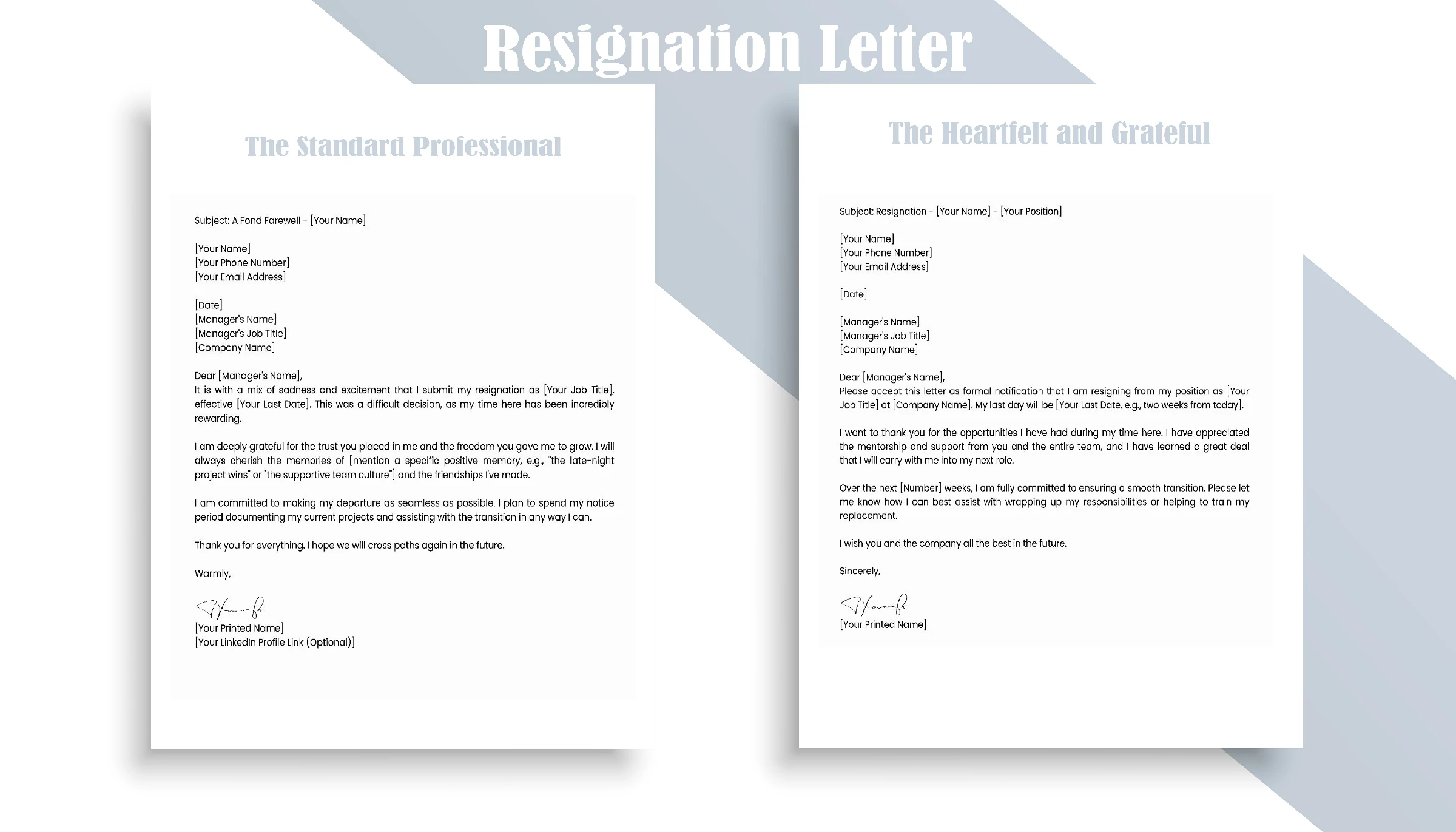
Template 1: The Standard Professional (Best for Business Offices)
You can use this template in most office settings. It is polite, straightforward, and covers everything without any extra fluff.- Subject: Resignation - [Your Name] - [Your Position]
- [Your Name]
- [Your Phone Number]
- [Your Email Address]
- [Date]
- [Manager's Name]
- [Manager's Job Title]
- [Company Name]
- Dear [Manager's Name],
- Please accept this letter as formal notification that I am resigning from my position as [Your Job Title] at [Company Name]. My last day will be [Your Last Date, e.g., two weeks from today].
- I want to thank you for the opportunities I have had during my time here. I have appreciated the mentorship and support from you and the entire team, and I have learned a great deal that I will carry with me into my next role.
- Over the next [Number] weeks, I am fully committed to ensuring a smooth transition. Please let me know how I can best assist with wrapping up my responsibilities or helping to train my replacement.
- I wish you and the company all the best in the future.
- Sincerely,
- [Your Signature (if printing)]
- [Your Printed Name]
Template 2: The Heartfelt and Grateful (Best for Teams That Work Together a Lot or Have Been Together a Long Time)
If you have a strong emotional connection to your team or have worked for the company for a long time, you can use a slightly warmer tone.- Subject: A Fond Farewell - [Your Name]
- [Your Name]
- [Your Phone Number]
- [Your Email Address]
- [Date]
- [Manager's Name]
- [Manager's Job Title]
- [Company Name]
- Dear [Manager's Name],
- It is with a mix of sadness and excitement that I submit my resignation as [Your Job Title], effective [Your Last Date]. This was a difficult decision, as my time here has been incredibly rewarding.
- I am deeply grateful for the trust you placed in me and the freedom you gave me to grow. I will always cherish the memories of [mention a specific positive memory, e.g., "the late-night project wins" or "the supportive team culture"] and the friendships I've made.
- I am committed to making my departure as seamless as possible. I plan to spend my notice period documenting my current projects and assisting with the transition in any way I can.
- Thank you for everything. I hope we will cross paths again in the future.
- Warmly,
- [Your Signature (if printing)]
- [Your Printed Name]
- [Your LinkedIn Profile Link (Optional)]
Template 3: The Short and Sweet (Best for Newbies or Part-Time Jobs)
Less is sometimes more. It's fine to send a short, polite letter if you're on probation or in a short-term job.- Subject: Resignation - [Your Name]
- [Your Name]
- [Your Phone Number]
- [Your Email Address]
- [Date]
- [Manager's Name]
- [Manager's Job Title]
- [Company Name]
- Dear [Manager's Name],
- Please accept this letter as my formal resignation from my position as [Your Job Title]. My last day of work will be [Your Last Date].
- I appreciate the opportunity to have worked with the team at [Company Name] and thank you for the experience.
- I will ensure all my current tasks are up to date before my departure.
- Sincerely,
- [Your Signature (if printing)]
- [Your Printed Name]
Things to Do and Not Do When Resigning in 2026
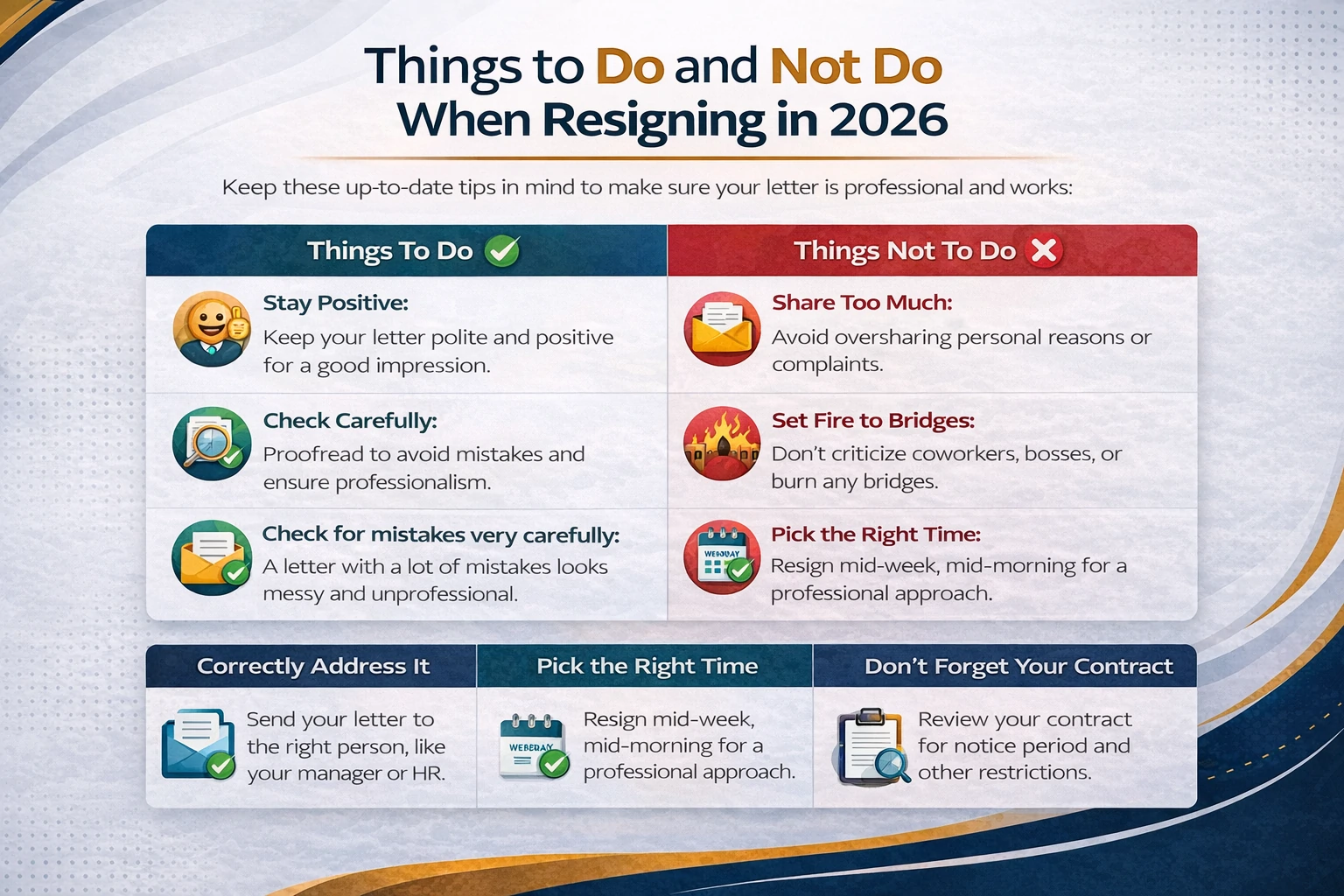
| Things To Do ✅ | Things Not Do ❌ |
| Stay Positive:
Your letter should sound polite, even if you don't like the job. You should never use the letter to complain. Writing an angry or emotional letter will only hurt your reputation and follow you for the rest of your career. | Share too much personal information:
You don't have to say why you need more money, why you don't like a coworker, or why the coffee machine in your new office is better. If you have to give a reason, keep it vague, like "a new opportunity" or "a role that fits with my career goals." Your personal life is your own. |
| Check for mistakes very carefully:
A letter with a lot of mistakes looks messy and unprofessional. At the very end of your journey, it shows that you don't care. Before you send it, use tools like Grammarly, read it out loud backwards (a trick editors use), or have a friend you trust look it over. | Set Fire to Bridges:
Don't say bad things about your coworkers, bosses, or company rules. You don't know how small the business world is. You never know who will be on the other side of the interview table in five years, or who might be a future client, partner, or source of referrals. |
|
Correctly Address It
Make sure you know who should get the letter. Is it your direct manager or the HR department? If you're not sure, look in your employee handbook or ask a coworker you trust. Sending it to the wrong person can slow things down and make things more confusing than they need to be. |
Be quiet
After they hand in their resignation, some workers stop thinking about work. Don't be that person. Keep doing your job well until the very end. People will remember you for how you left. |
|
Pick the Right Time
Don't quit on a Friday afternoon or right before a holiday. People often think that mid-week, mid-morning is the best time to be professional. This gives your boss time to think about the news and start making plans before the weekend. |
Don't Forget to Look Over Your Contract
Before you send anything, make sure to read your employment contract again to see if there are any notice period requirements, non-compete clauses, or other restrictions that could affect your departure or next job. |
What to Do Next: After You Hit Send
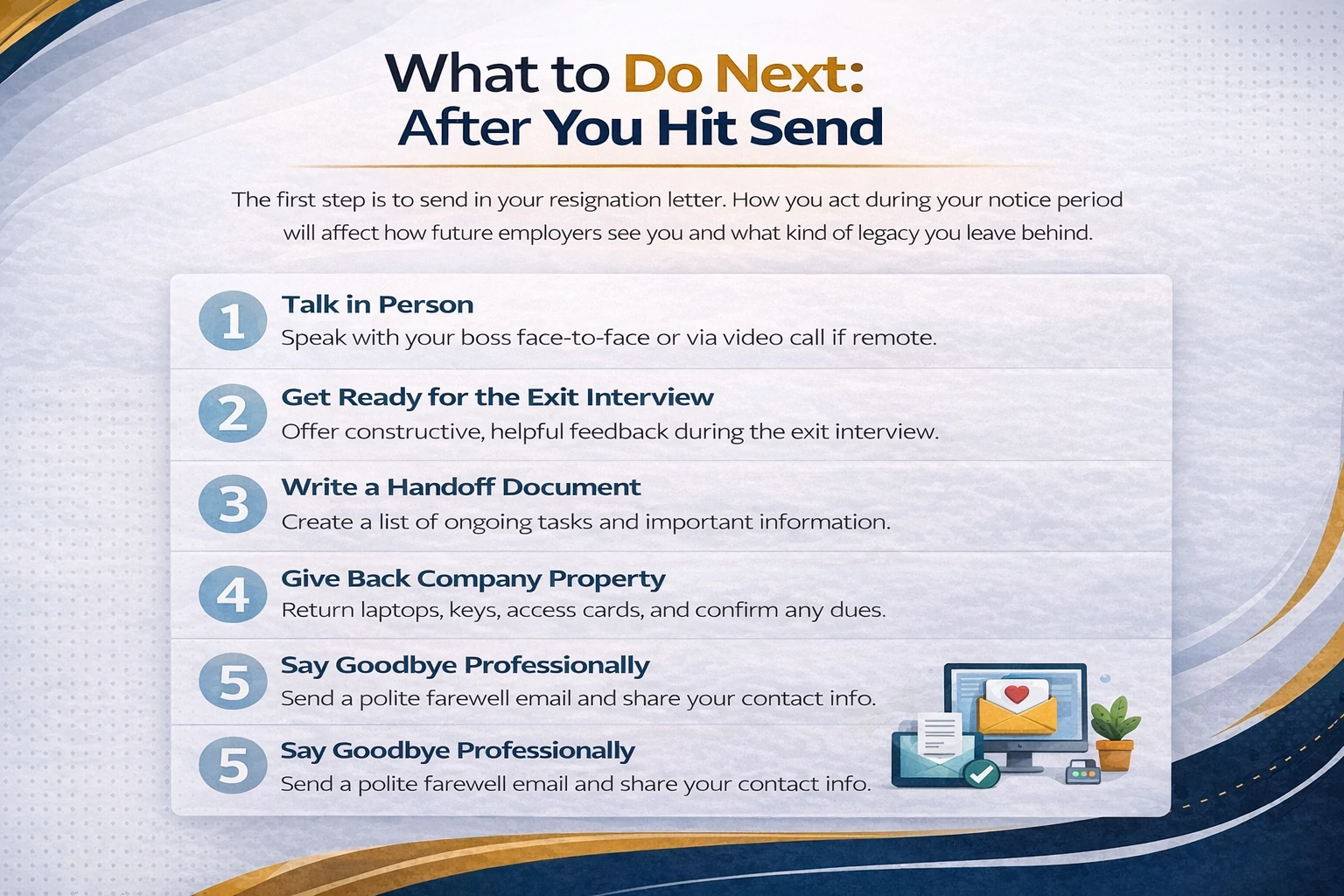
1. Talk in Person
If you can, talk to your boss in person right before or after sending the email. In a remote setting, this means more than just a message. It means a video call. It shows bravery and respect, and it makes things more personal.2. Get ready for the exit interview
A lot of HR departments do exit interviews. Give feedback that is honest but helpful. Instead of attacking people, frame criticism as chances to get better. This is your chance to help future workers without hurting your relationships.3. Write a Handoff Document
Don't just say you'll help with the transition; do it. Make a list of your current projects, tasks that are due soon, and login information (shared securely). Your boss will remember how professional you were, and your successor will thank you.4. Give back company property
Make sure you give back all of your company property, like laptops, access cards, parking passes, and anything else, by your last day. Pay off any bills or expense reports that are still due. Start fresh when you leave.5. Say goodbye in a professional way
On your last day, you might want to send a short goodbye email to coworkers you worked with closely. Stay in touch by keeping things positive and giving out your personal contact information. A simple "It was nice working with you" means a lot.Final Thoughts: Your Reputation Is Your Resume
It doesn't have to be hard to write a resignation letter. Don't think of it as an end. Instead, think of it as a transition, a bridge between one part of your career and the next.
Following this guide will help you leave your job with a new job offer, a better professional reputation, and strong relationships. The way you leave a job is often just as important as the work you did while you were there in today's connected world.Keep in mind that people may forget the specific projects you worked on, but they will always remember how you made them feel, especially when you left.